Thursday, April 19, 2007

Travels to Angkor, Siem Reap, Cambodia: Part V

This is it, Travels to Angkor, Siem Reap, Cambodia: Part V, documenting day 5 of our trip and is also the lsat of the five part series. To get a full account of the events of earlier days, visit:
Travels to Angkor, Siem Reap, Cambodia: Part I
Travels to Angkor, Siem Reap, Cambodia: Part II
Travels to Angkor, Siem Reap, Cambodia: Part III
Travels to Angkor, Siem Reap, Cambodia: Part IV


Day 5 was not actually the last day of our trip to Cambodia, but the second last. Since we left on the next day early morning, a 7a.m. flight, day 5 became the actual last full day we spent there. We did not have any trips or itinerary planned for the day, so we got up rather late and had breakfast at around 9am. We had the same usual breakfast for the last time and off to spent our day in Siem Reap town.
Right shows stalls outside the temple selling fresh flowers for devotees.
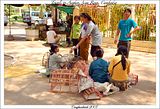
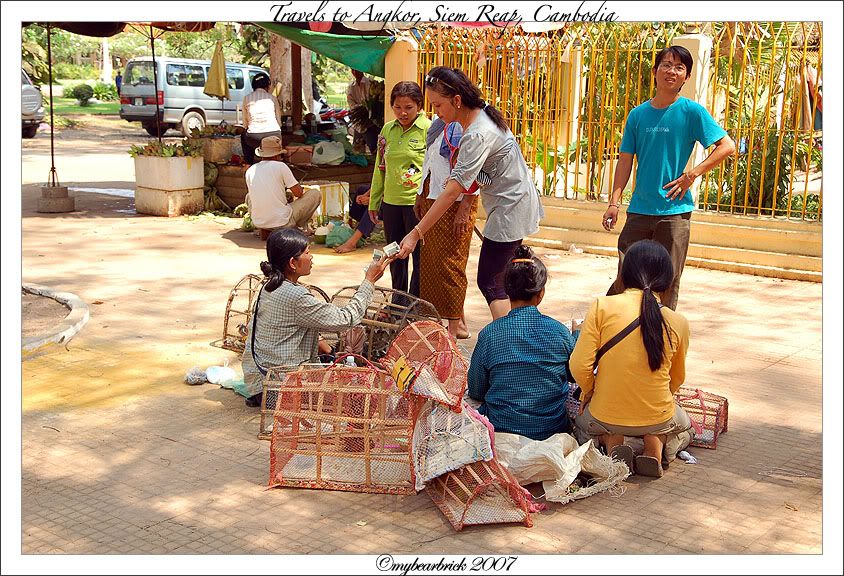
Left shows devotees buy birds to be set free.
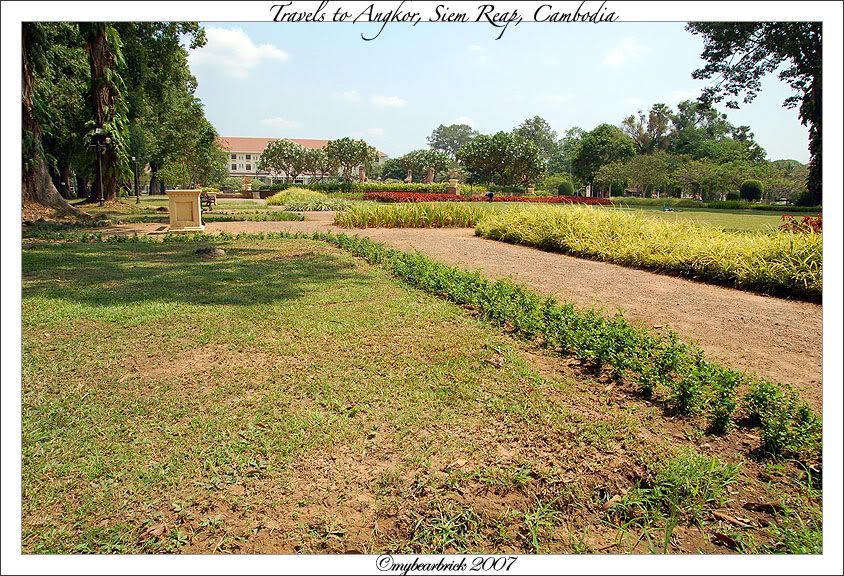
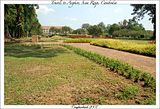
Right shows a park should not appeal to the locals.
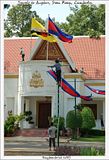
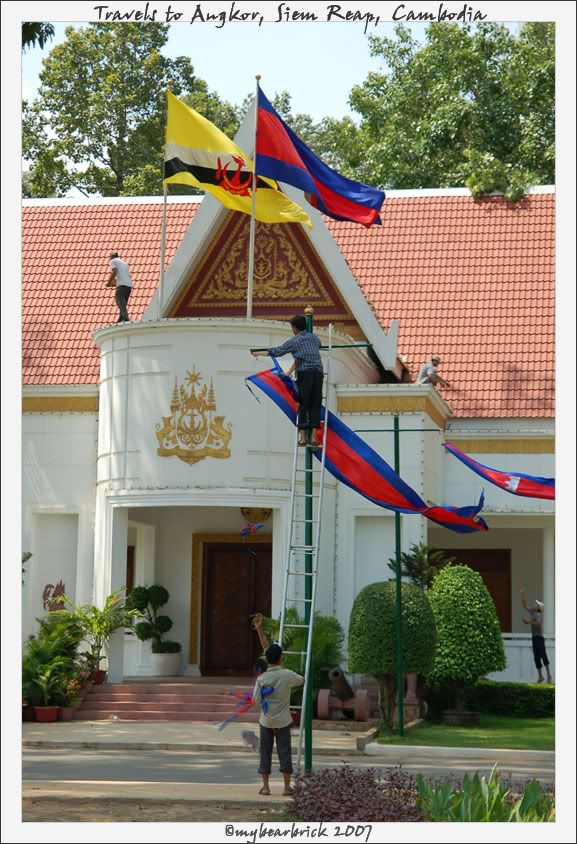
I guess it was near New Year, left shows flags being hung outside a government building. The guy from below will throw the flag up to the guy at the top of the ladder, which he will then hang it on the pole.
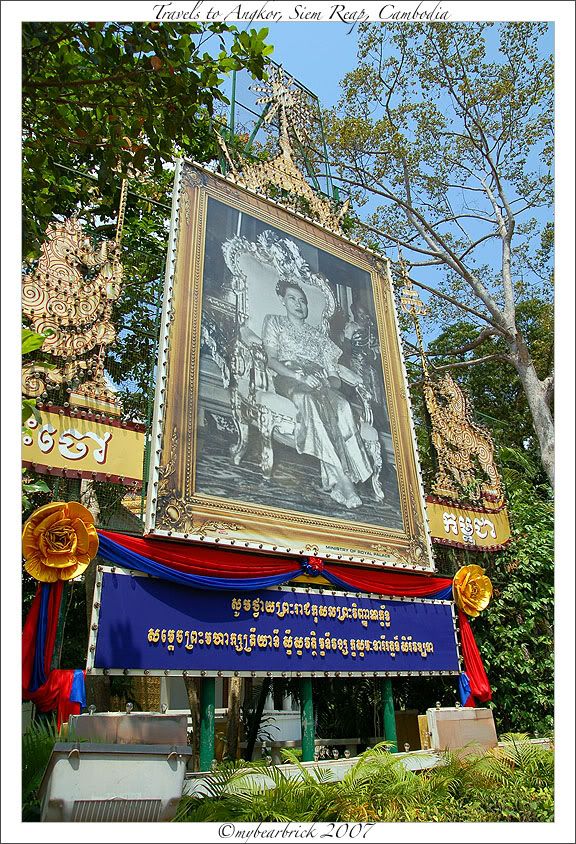
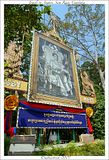
Right shows an image of what seem to me like the queen or something.
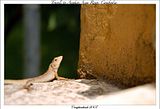
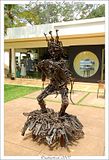
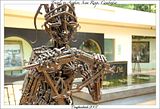
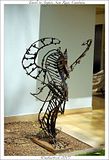
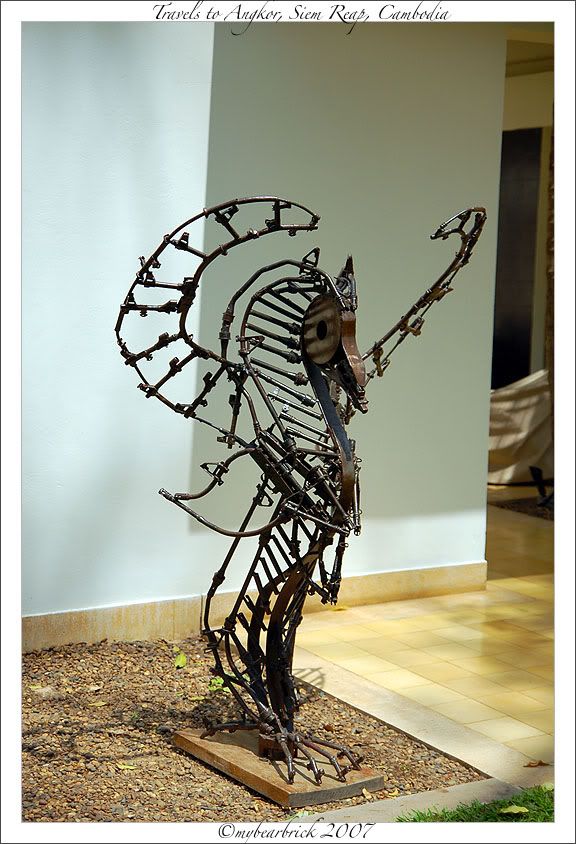
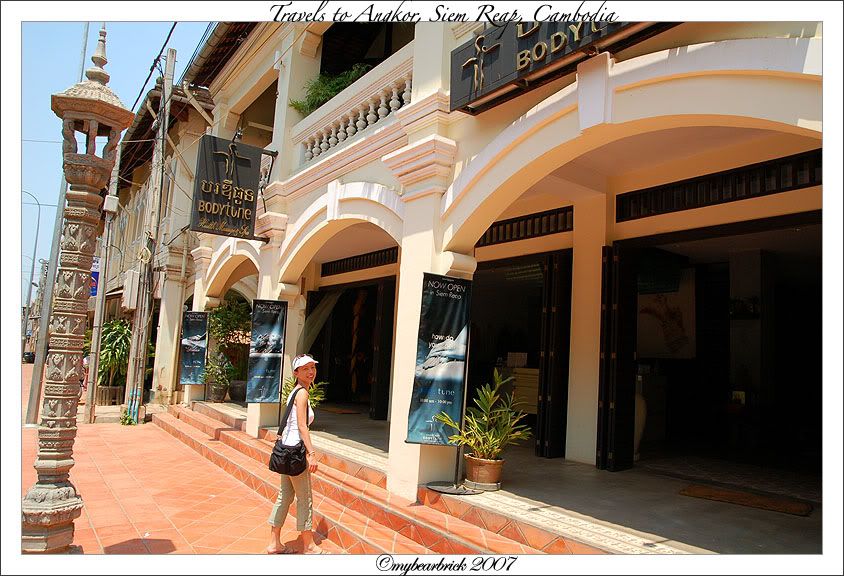
Outside this hotel/restaurant/spa/gallery, there were sculptures that were made using parts of guns.
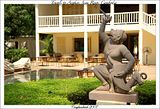
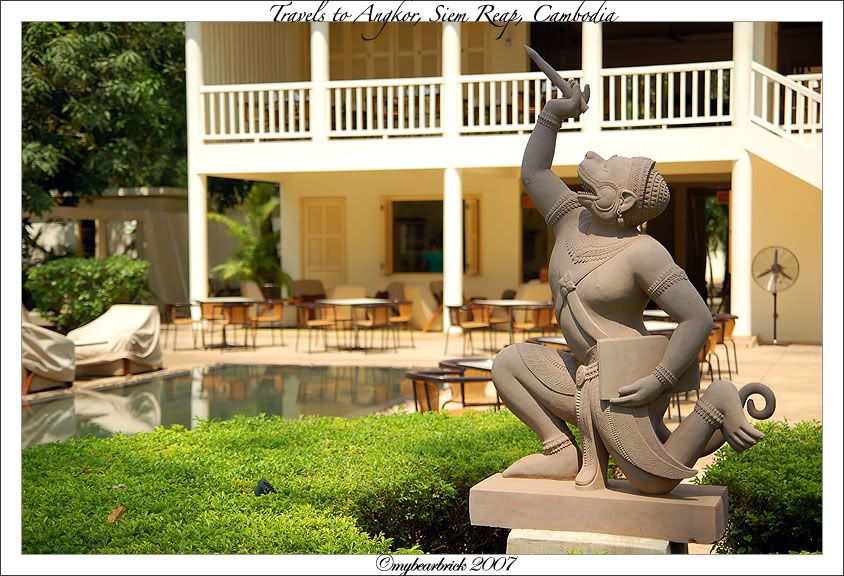
Left shows a monkey god holding a brush and book at the hotel/restaurant/spa/gallery place.
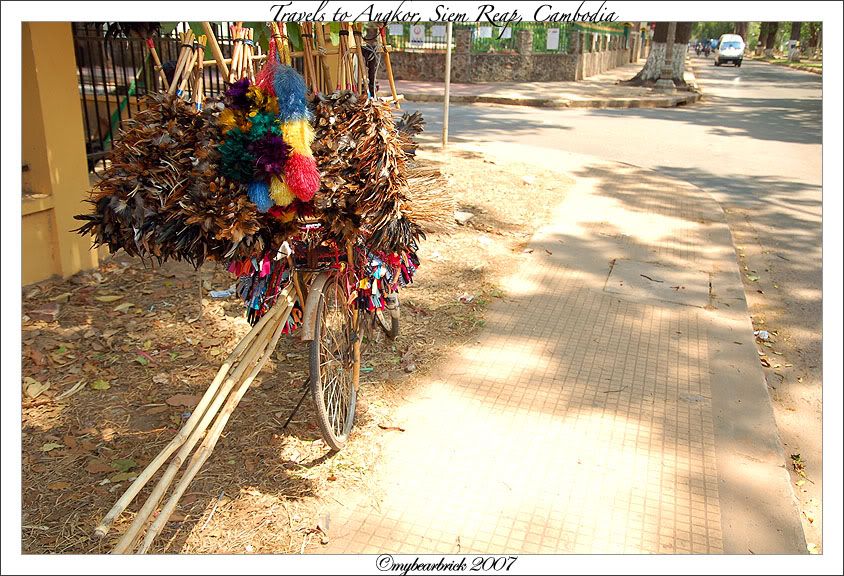
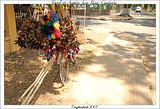
Right, need a feather duster or cane?
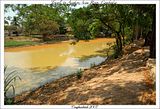
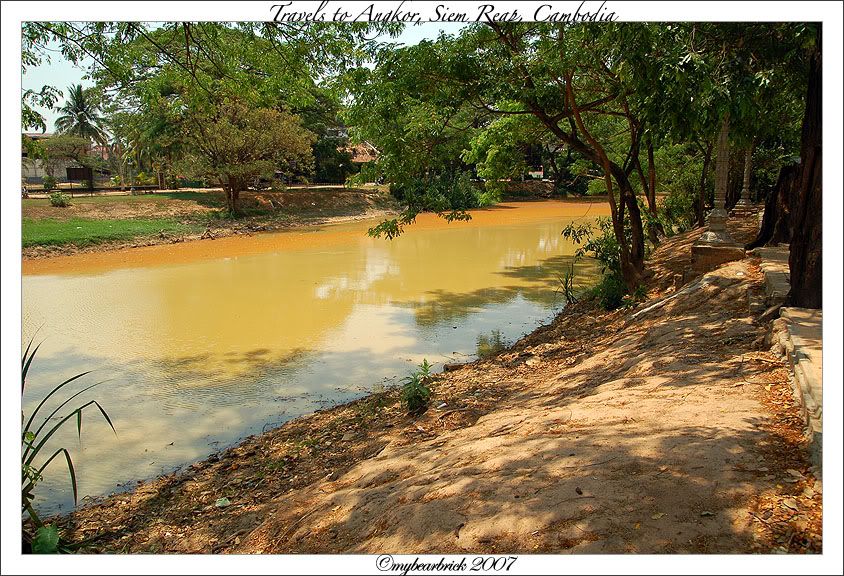
Left shows the 'river' that cuts through Siem Reap town.
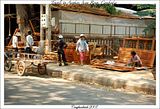
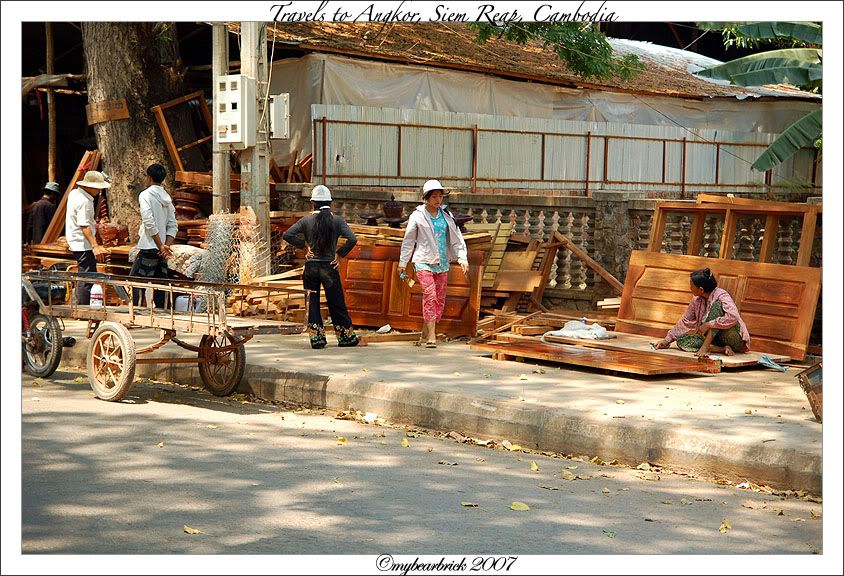
Left shows a carpenter's workshop that sells furnitures as well.
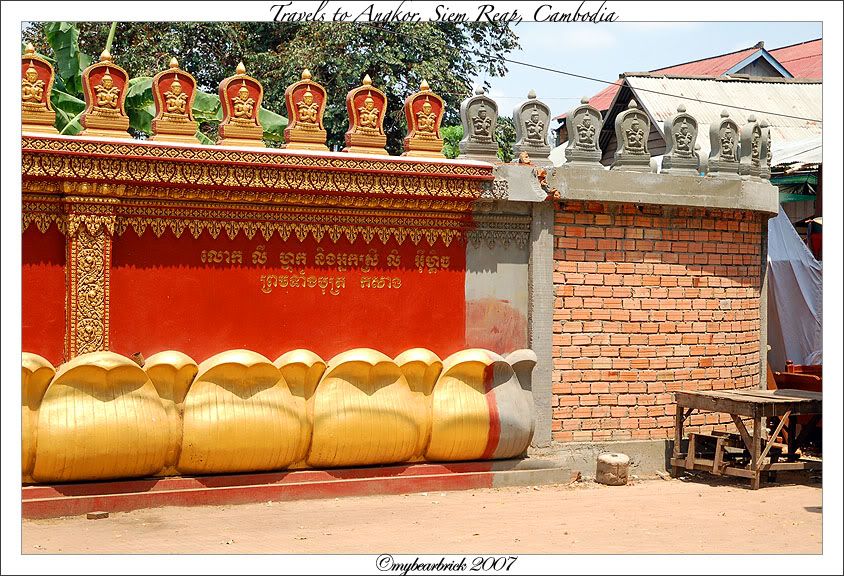
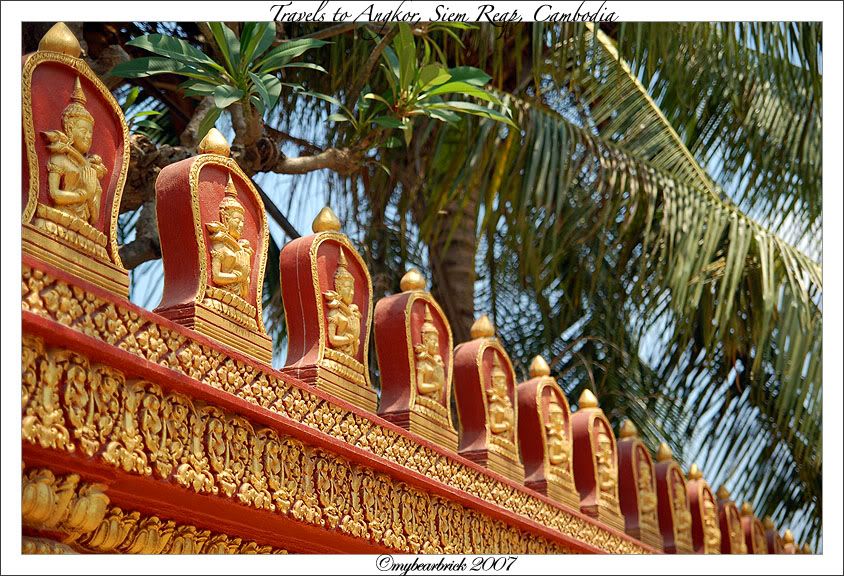
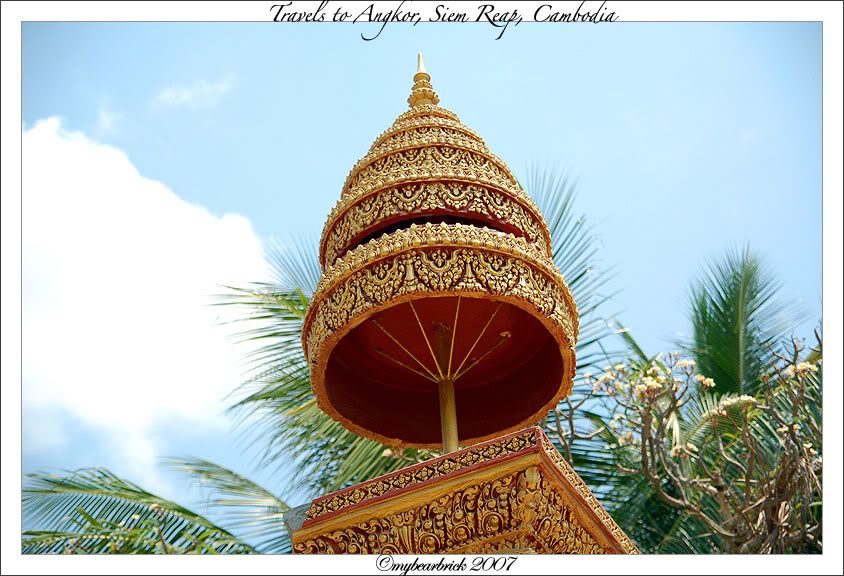
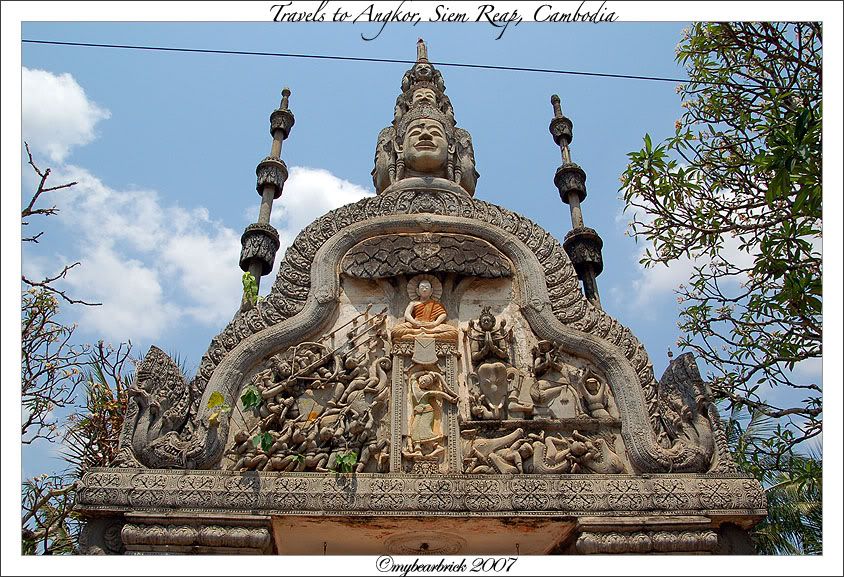
Right, outside a modern temple.
The painting of the temple has yet been completed.
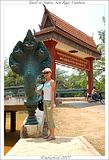
Opposite the temple is a modern 'naga' bridge that cuts across the 'river.
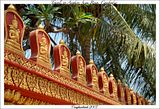
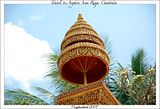
More of the modern temple.


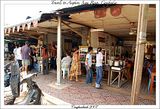
We soon found ourselves at the Old Market again. This time we did some really serious shopping. I bought myself a neat looking North Face waist pouch for my DSLR and a pair of Puma sneakers at a steal.
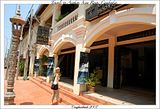
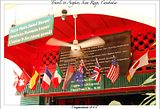
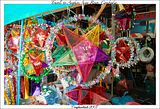
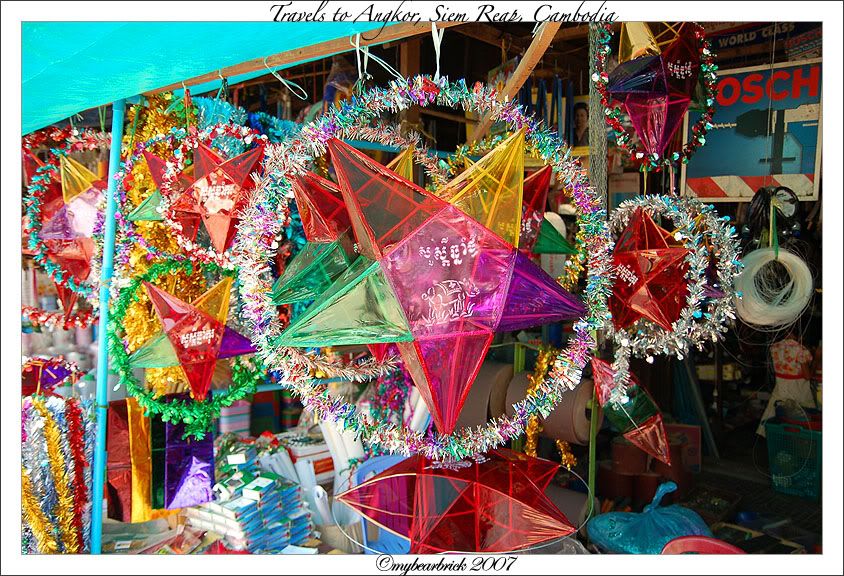
Middle, the colourful lantern seems to be something special for the New Year.
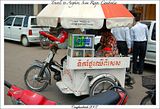
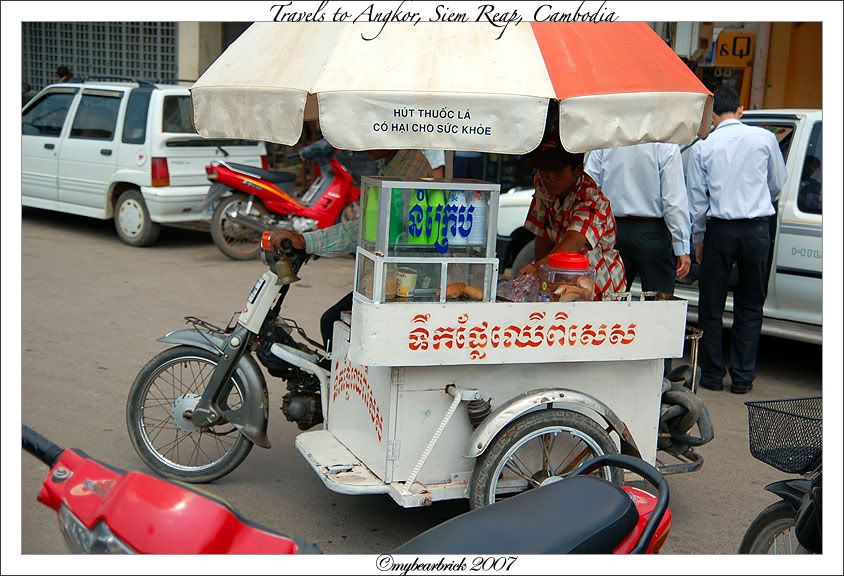
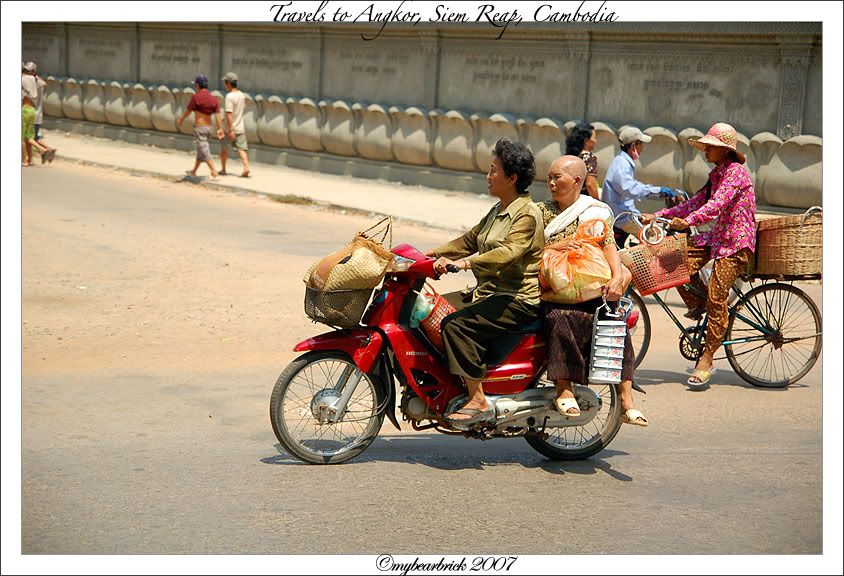
Right, a cooked food stall selling really budget local food, no extreme gastronomies but the cleanliness is really challenged.
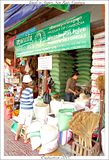
Selling rice
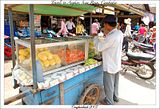
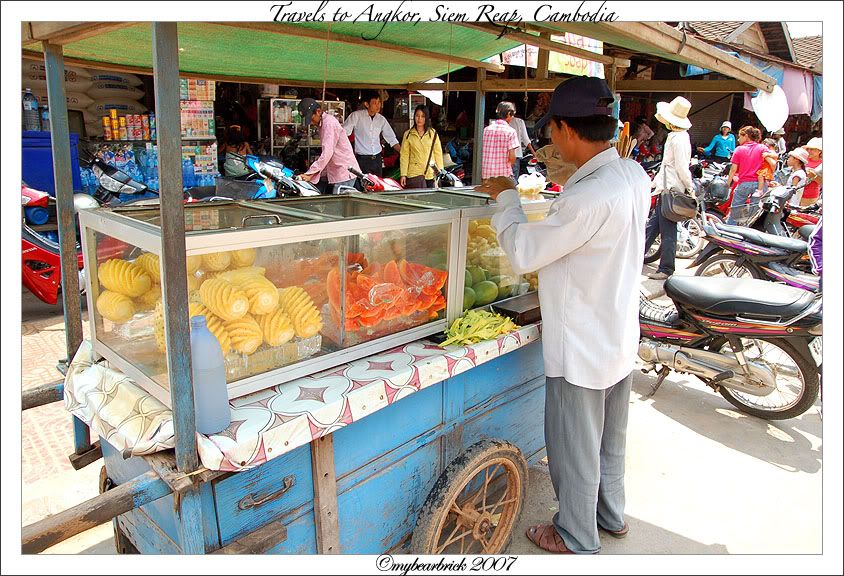
Left shows a pull cart fruits seller, I hope the ice that the fruits are sitting on are clean.
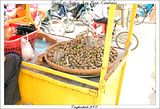
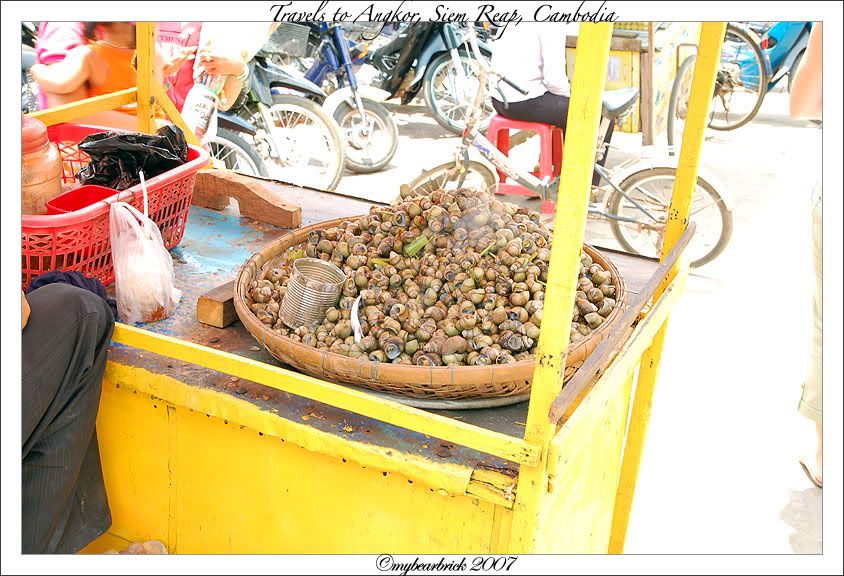
Right, anyone for a local street snack, french style, snails.
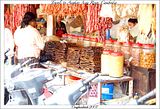
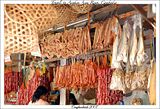
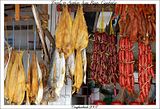
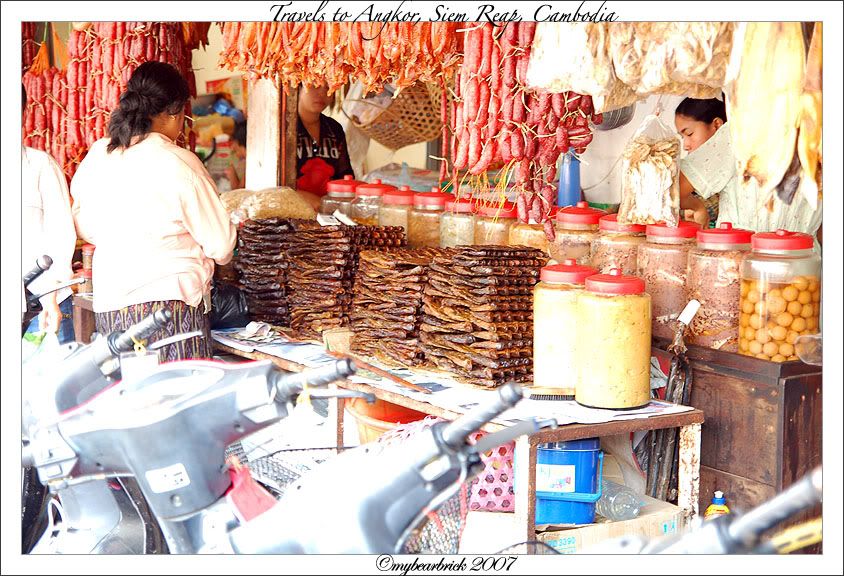
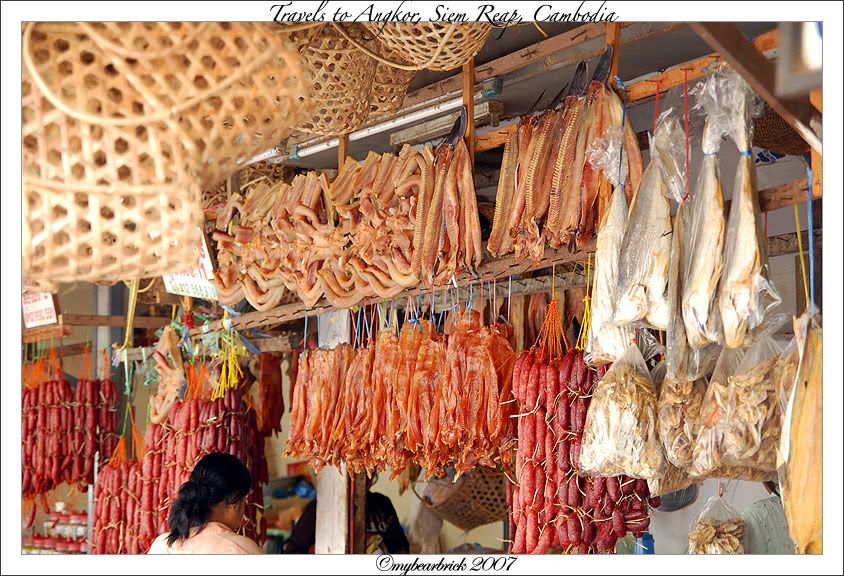
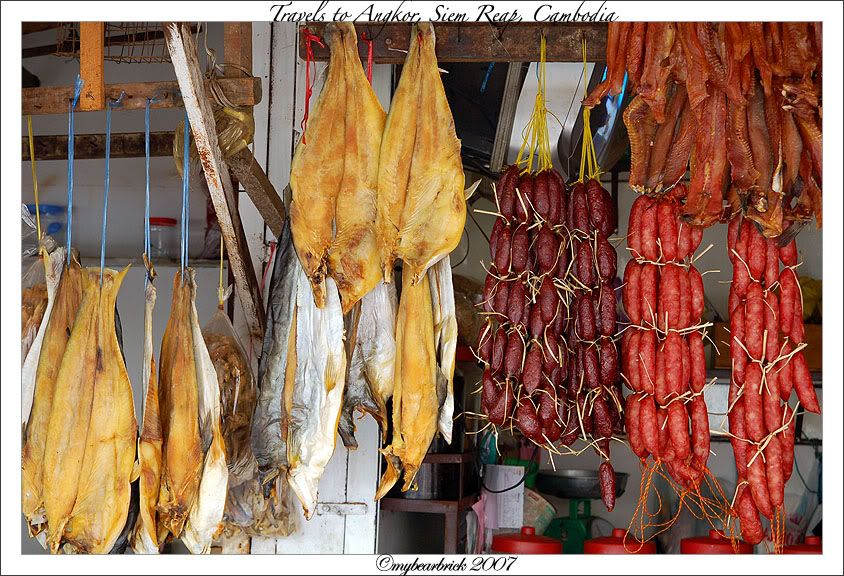
A variety of preserved meat are sold in the market.
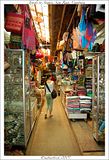
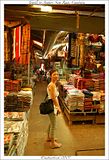
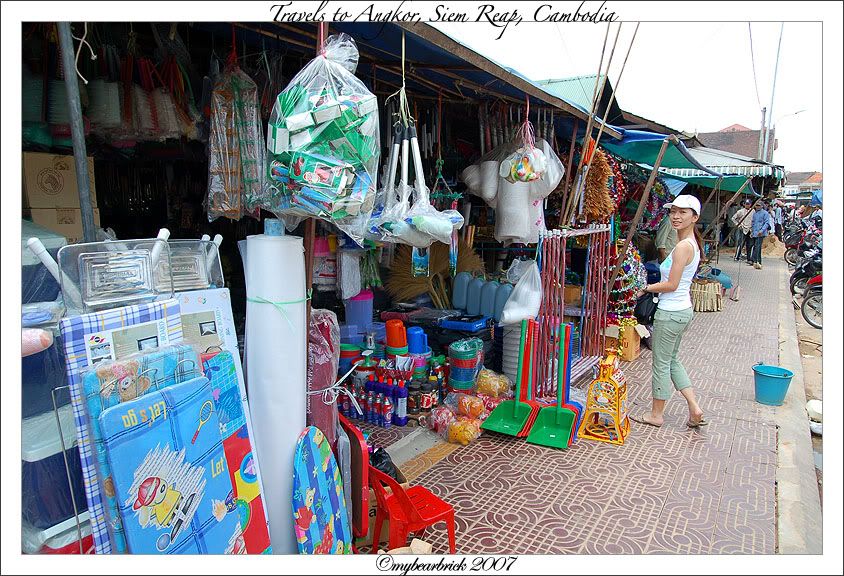
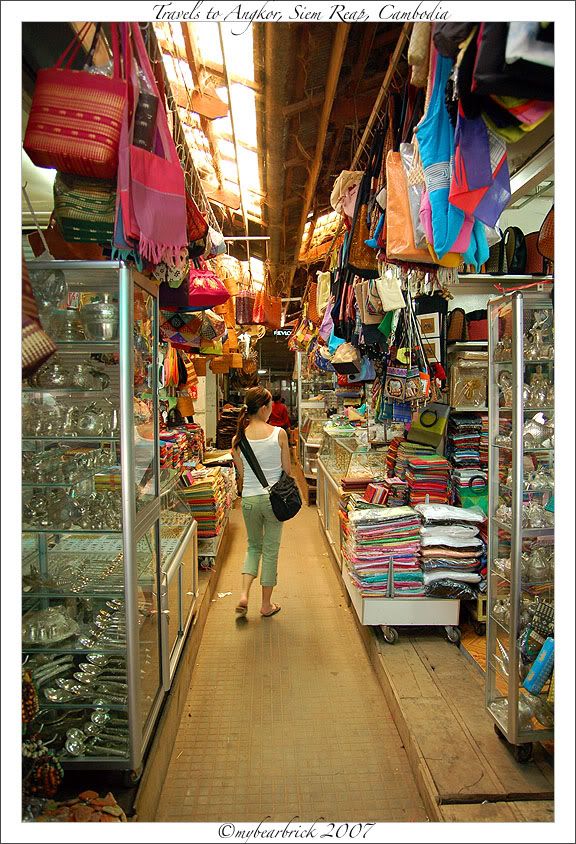
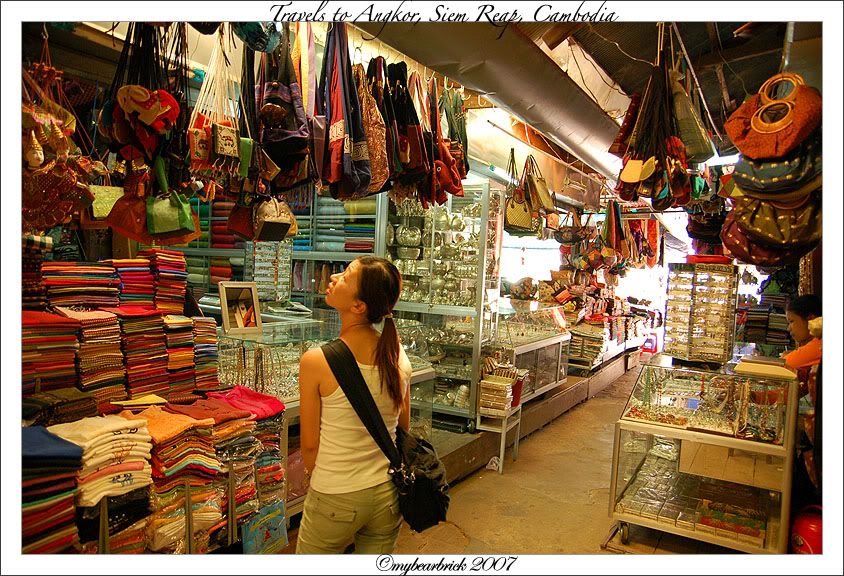
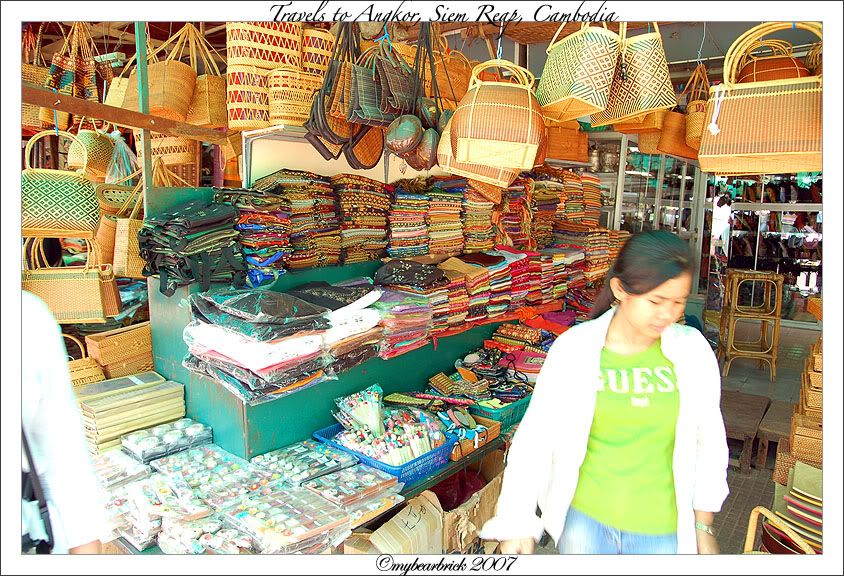
Walking though a network of souvenier stalls.
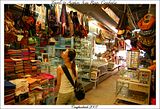
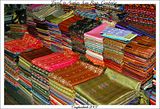
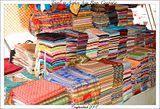
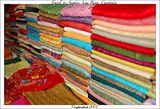
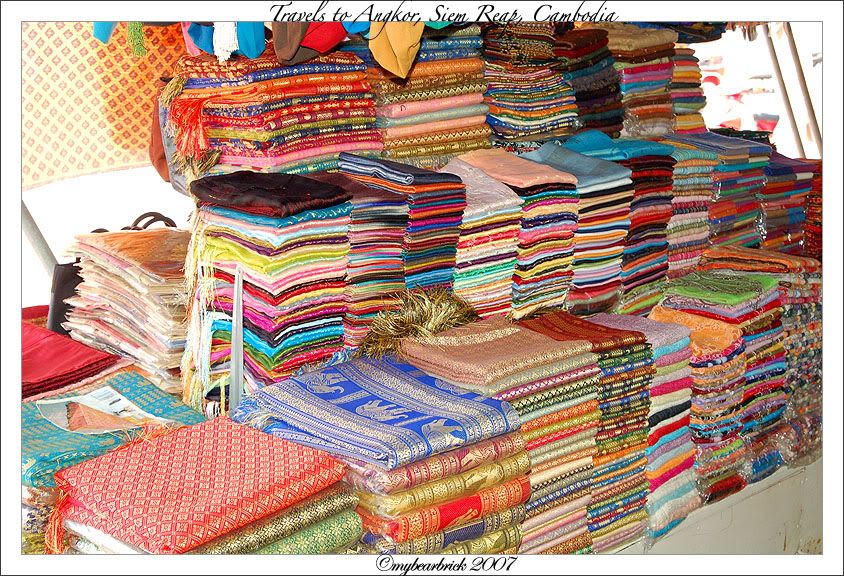
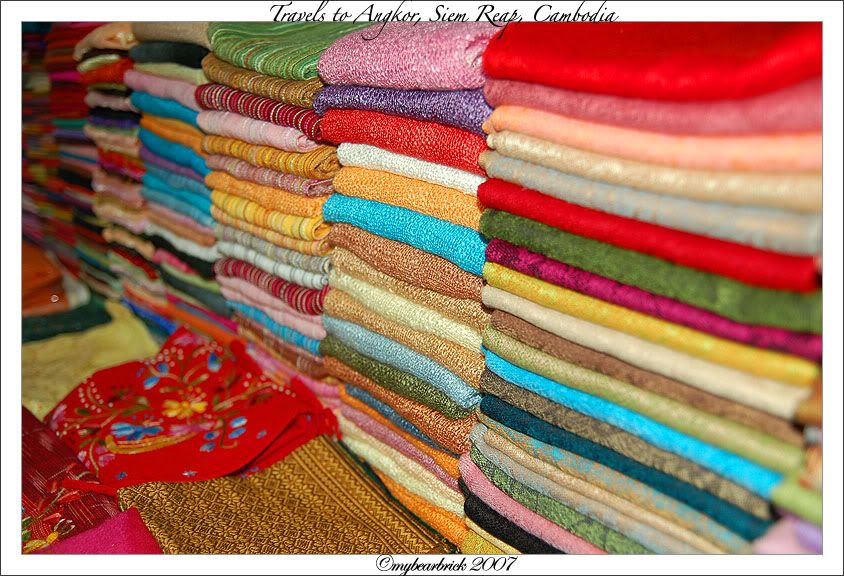
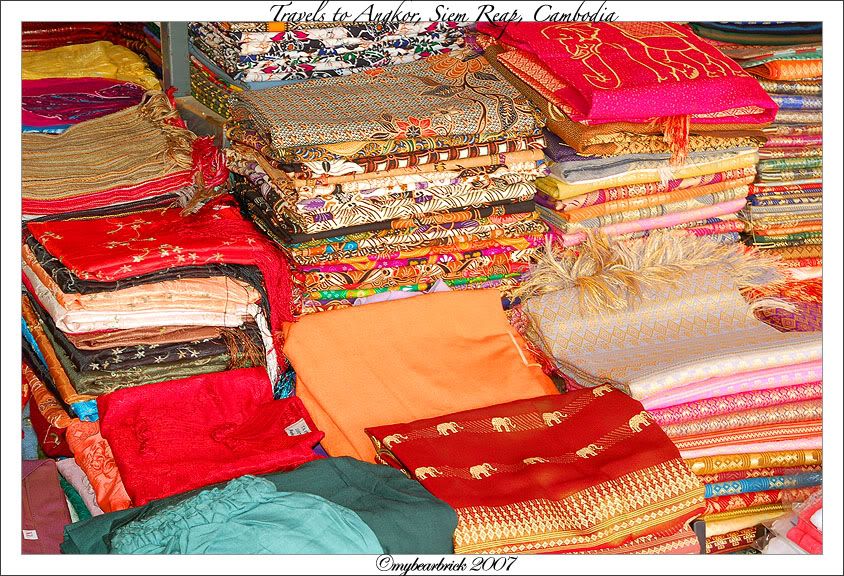
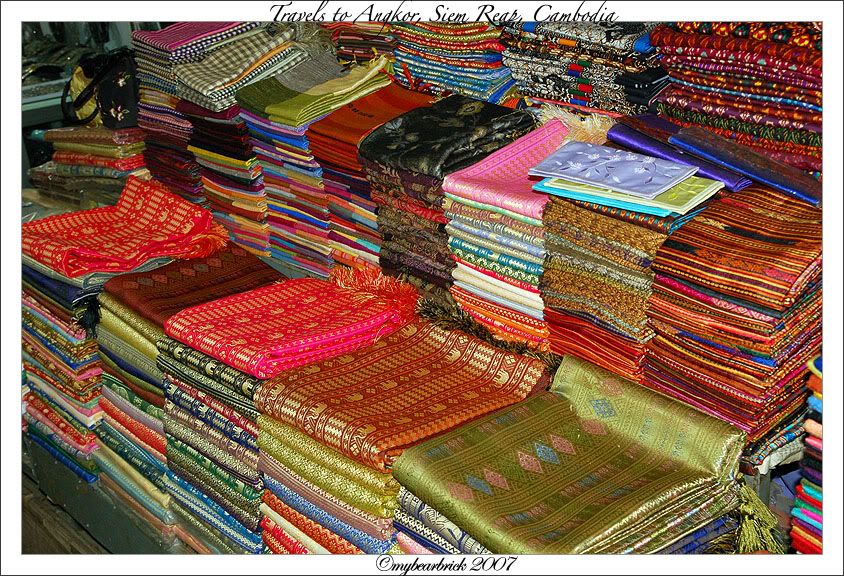
Not the finest grade of Khmer silk but a relatively cheap but attractive range is available at the market.
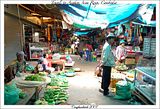
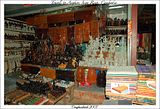
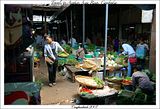
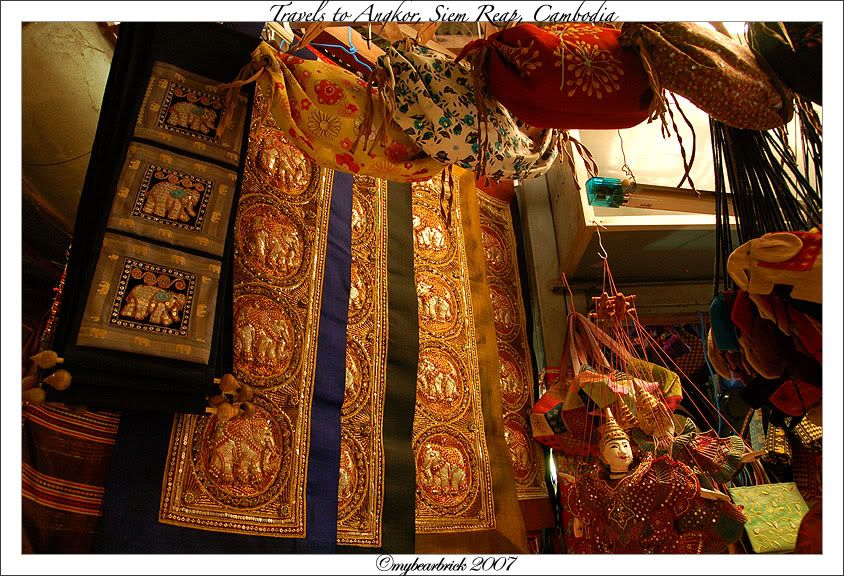
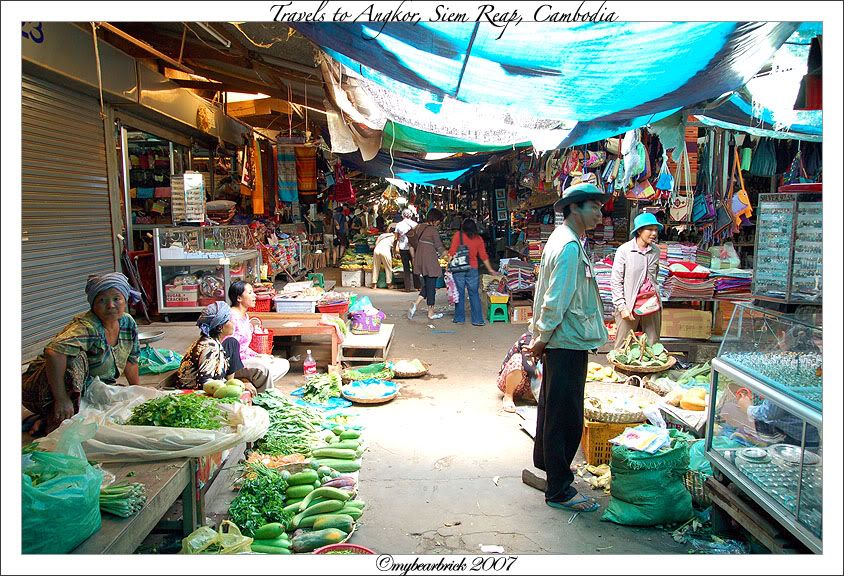
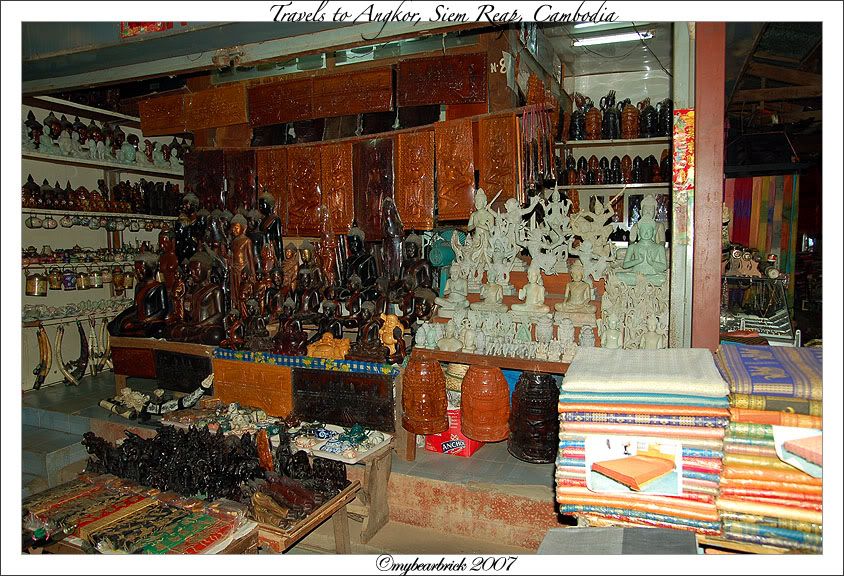
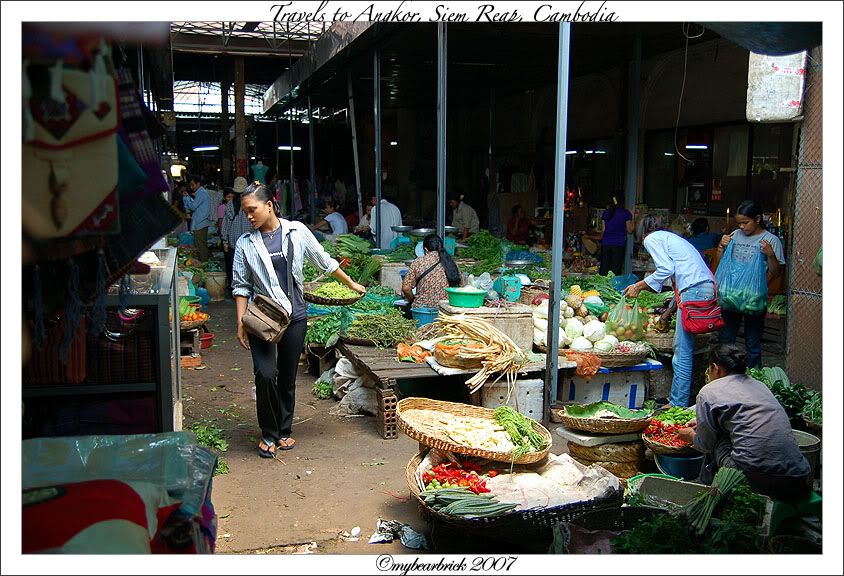
Left, the wet market area. Middle shows a shop selling replicas of religious sculptures.
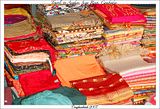
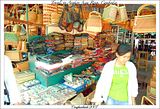
Left, more silk scarfs. Right, wet market.
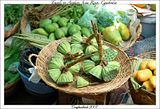
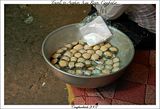
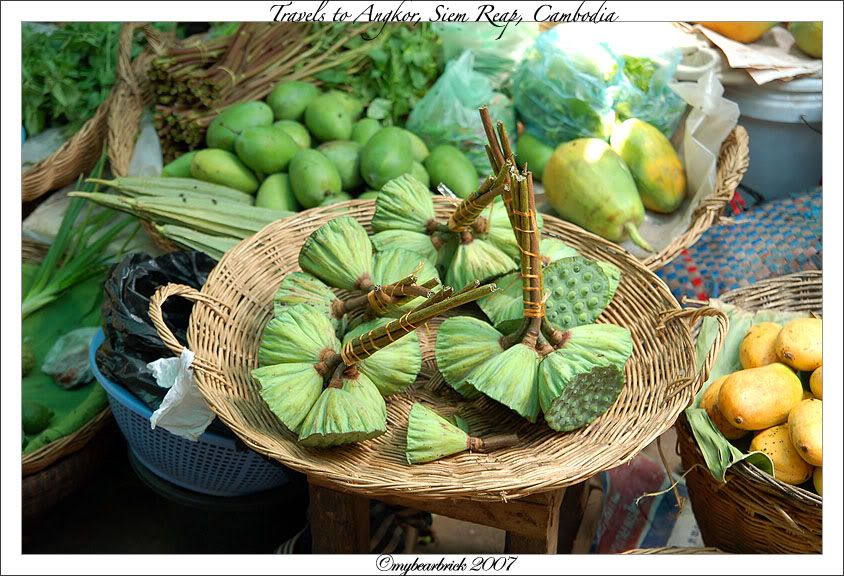
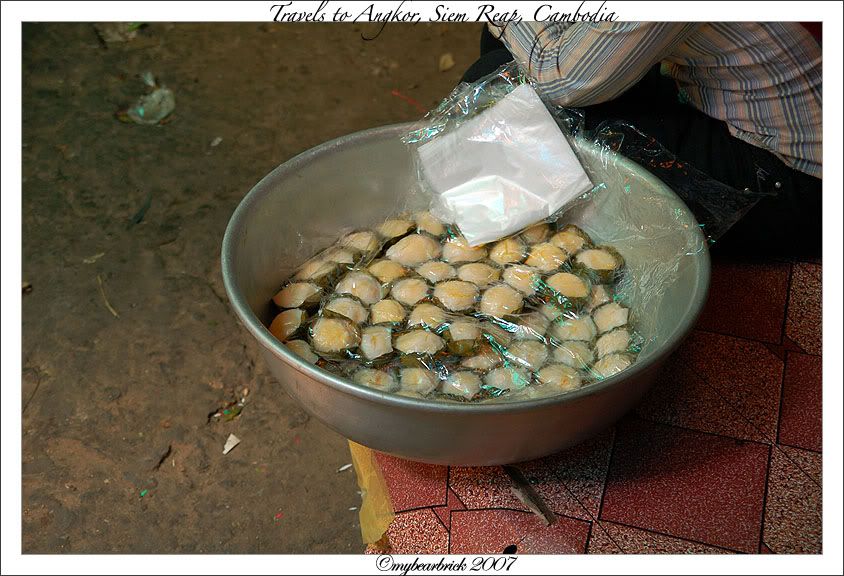
Left, a basket of lotus fruit. Right, looks like fish cake.


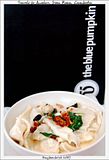
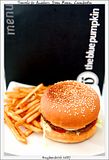
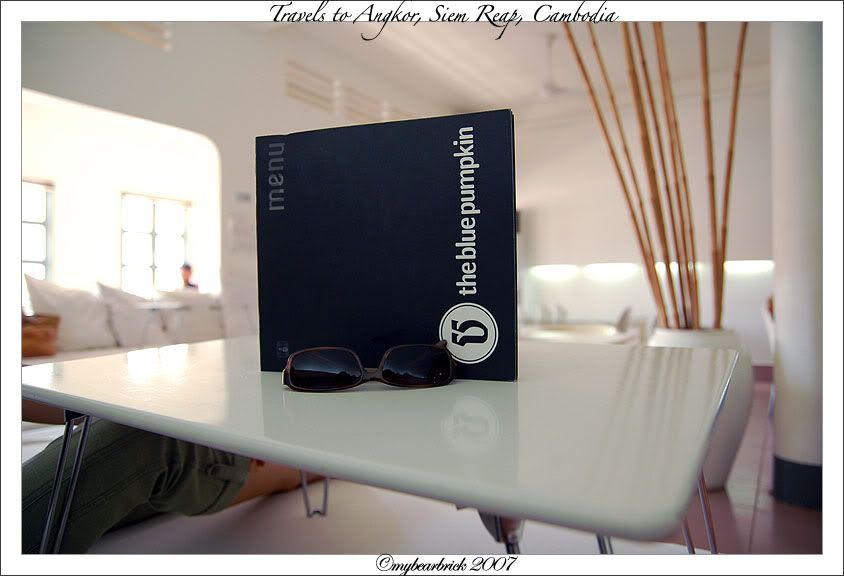
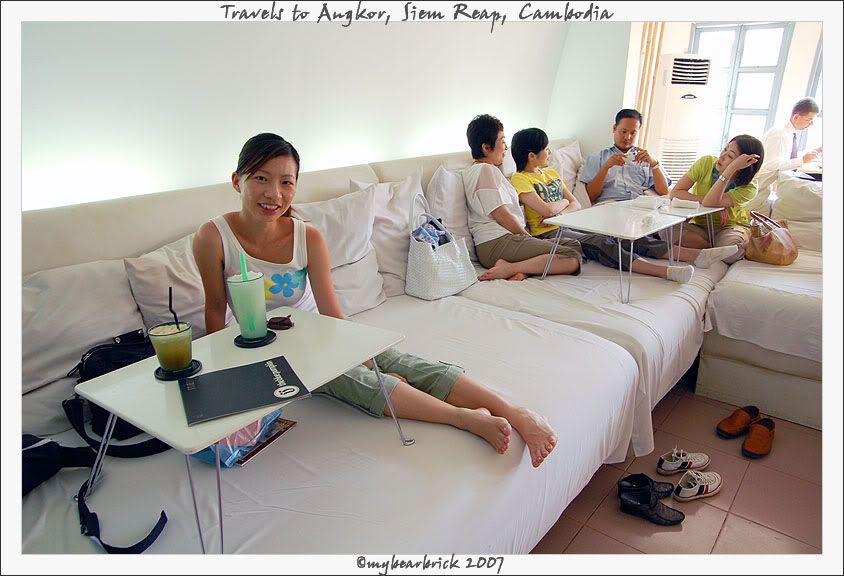
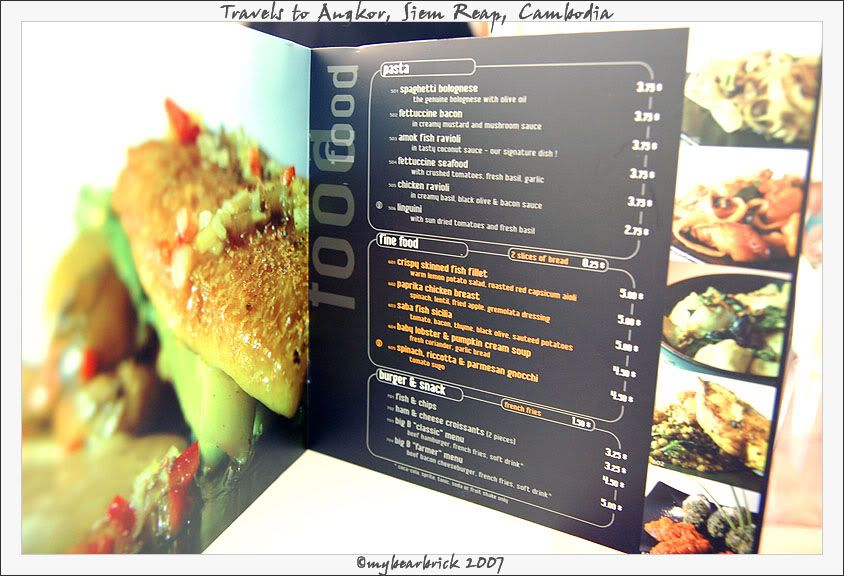
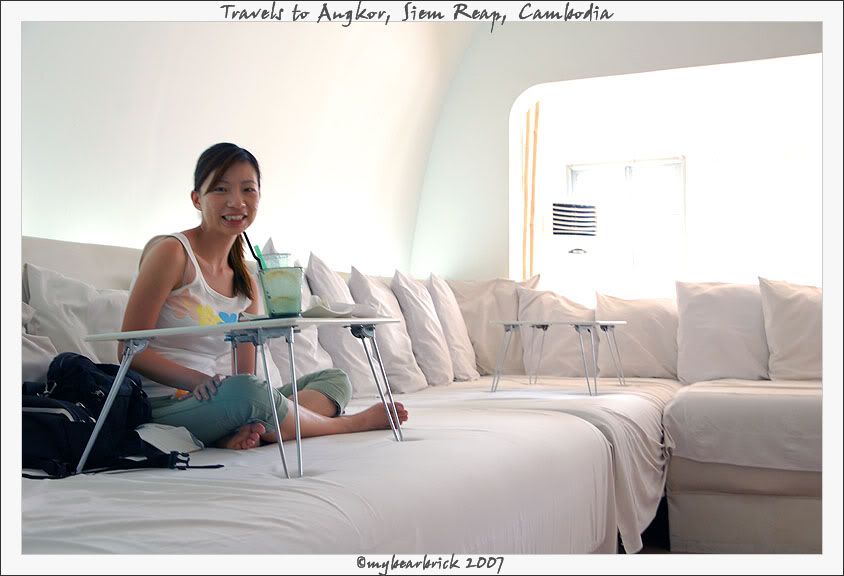
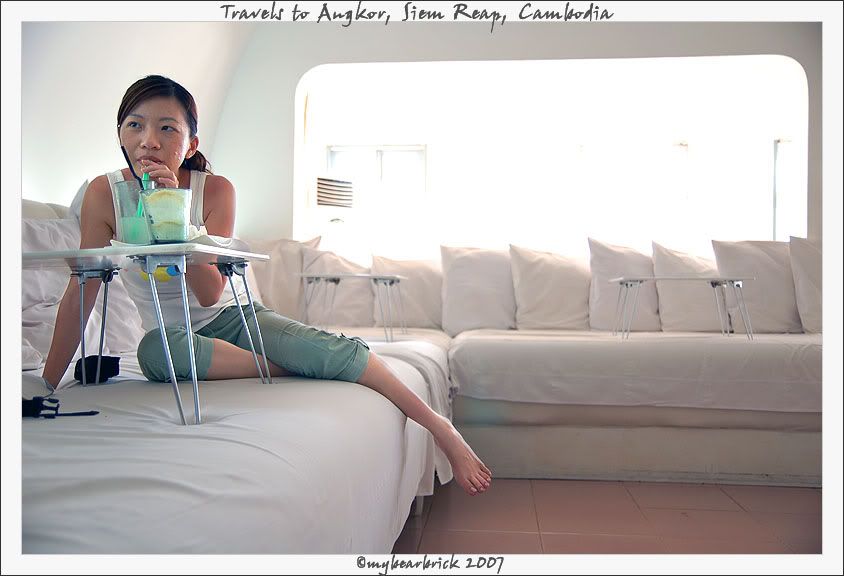
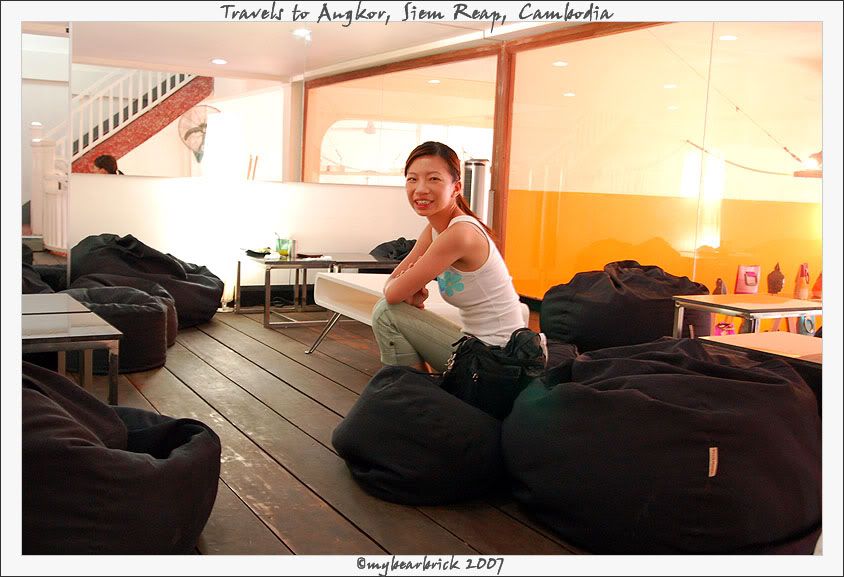
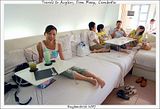
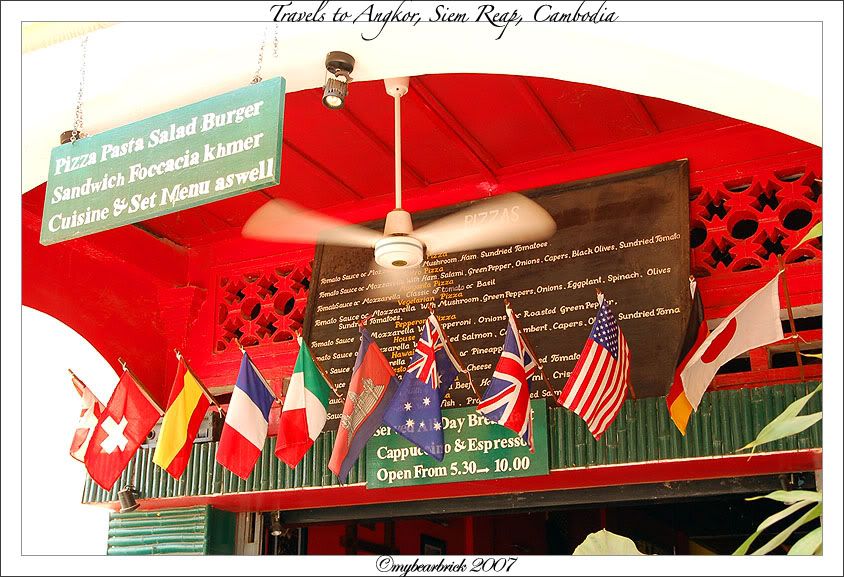
We visited The Blue Pumpkin again and this time, we were early. We got a real good position on the tall couch on the second level's Cool Lounge. This time, I was all so trigger happy on my D50 that later, some one started to follow what I was doing and started snapping his food with his EOS1D. Oh no, I have forgotten the names of the food that I had eaten!
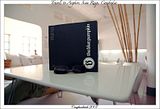
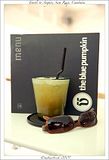
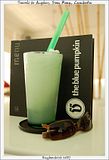
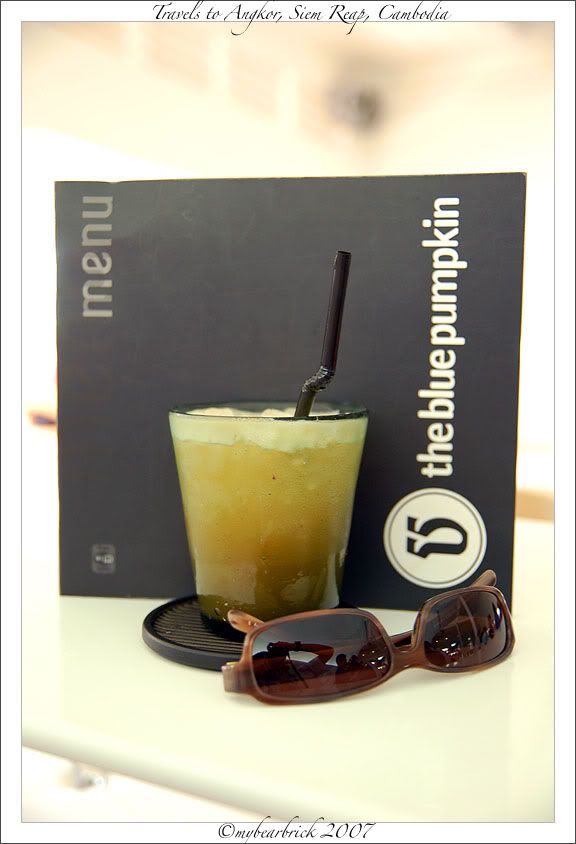
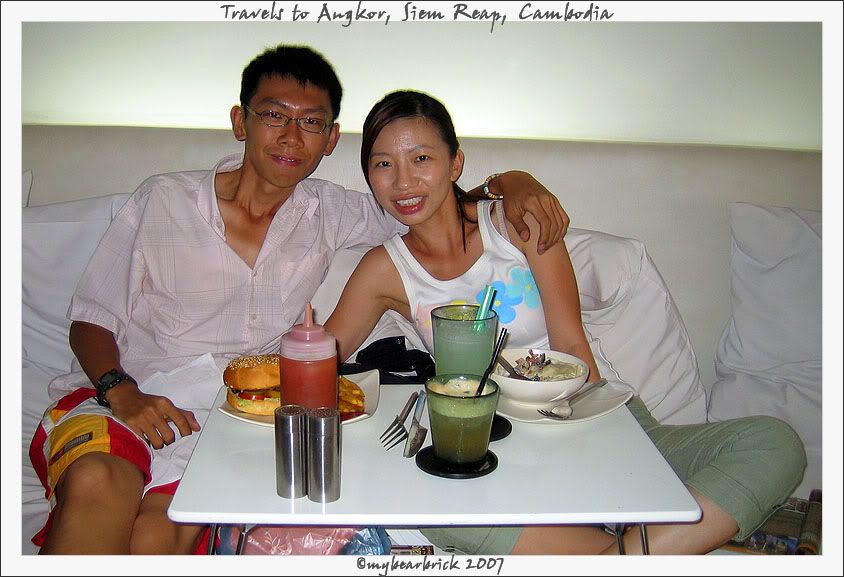
Left, I had their health drink, some lemongrass tonic.
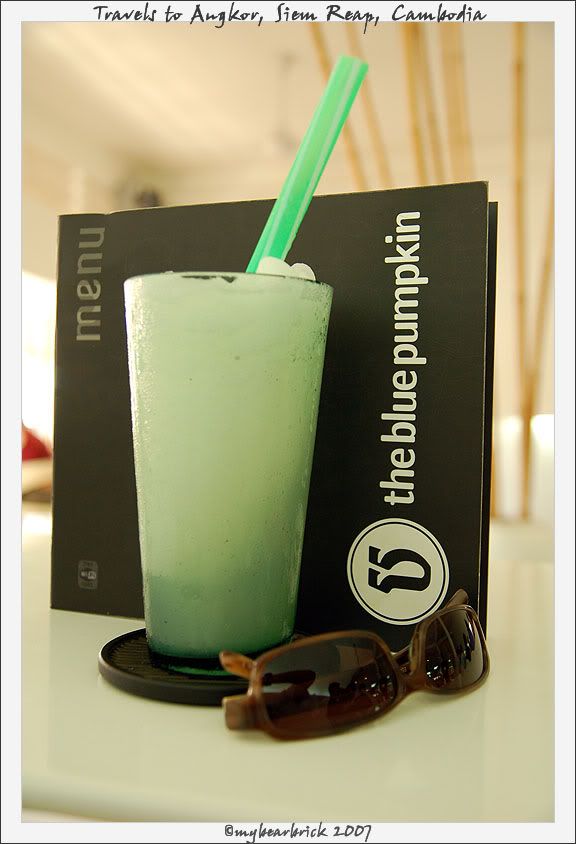
Right, Fio had the same ice blended lemon juice.
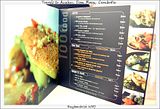
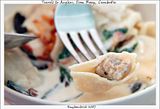
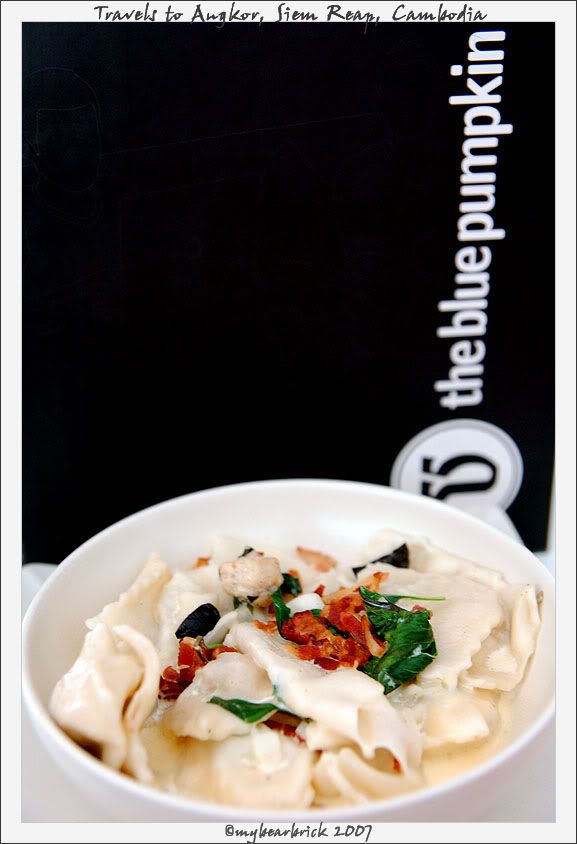
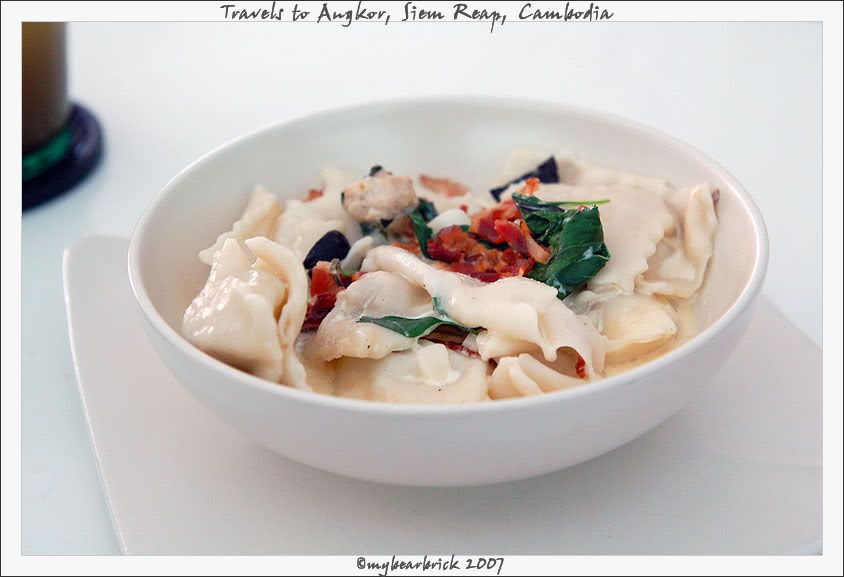
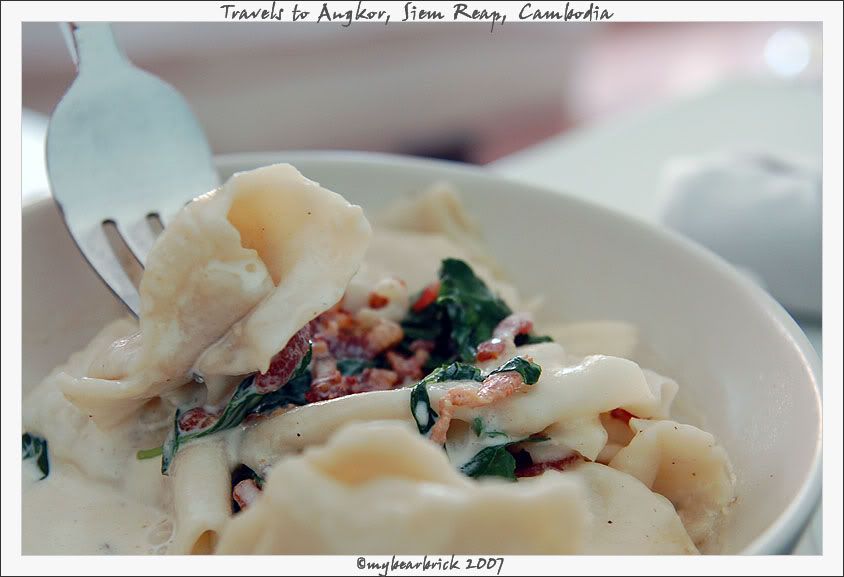
Left, Fio had this pasta which I think is some Ravioli with bacon.
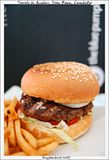
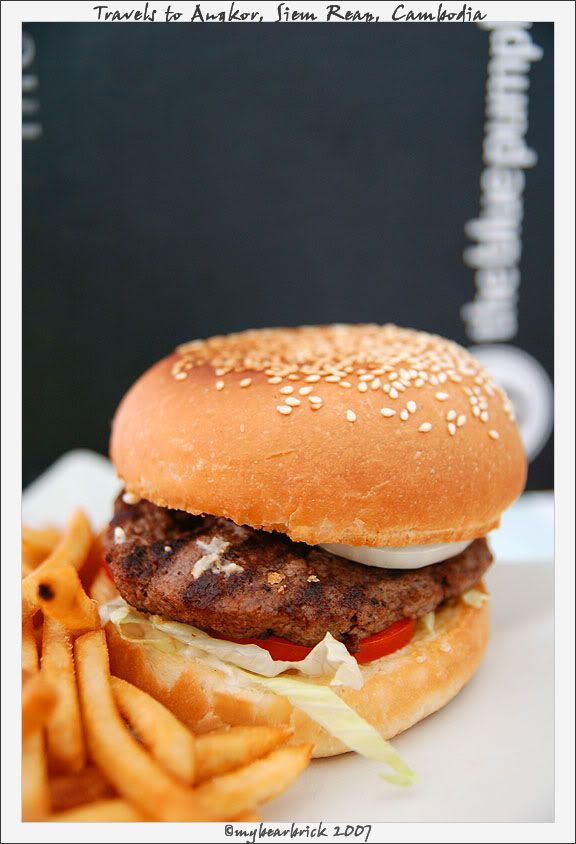
Middle and right, I had a beef burger with fries! Nice grill with a smokey taste at every single bite on the juicy patty.
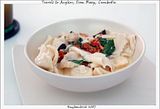
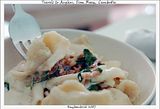
Ravioli tasted right! Not too heavy and not too dilute.
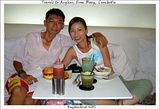
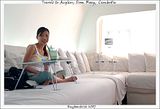
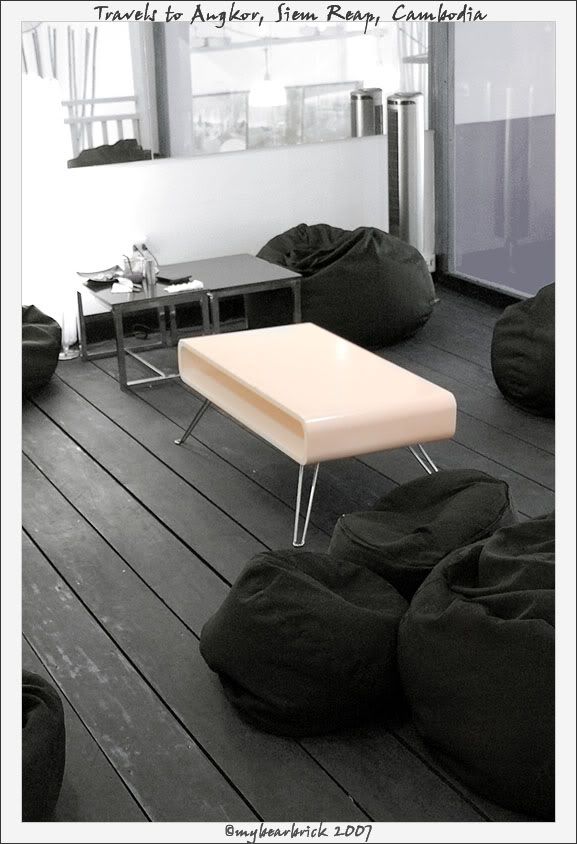
Relaxing on the cool couch, after the lunch crowd has left.
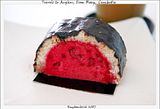
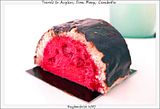
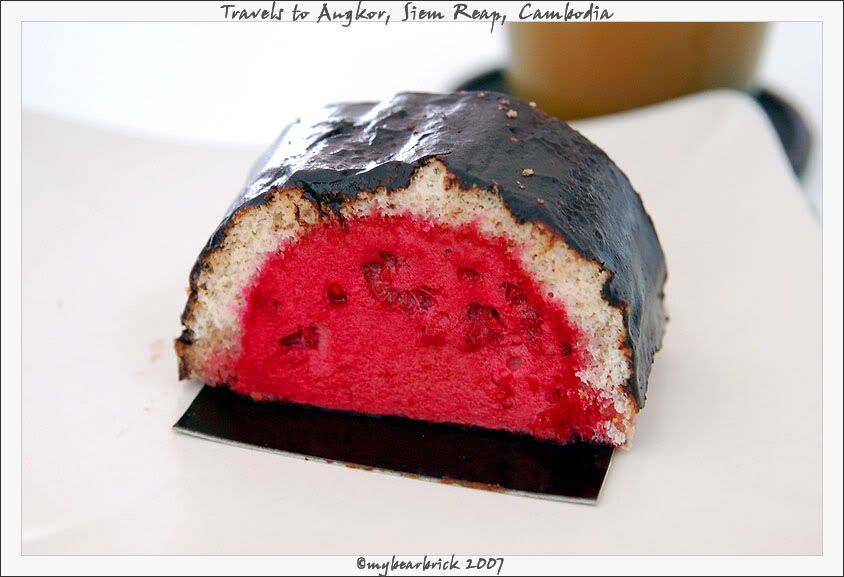
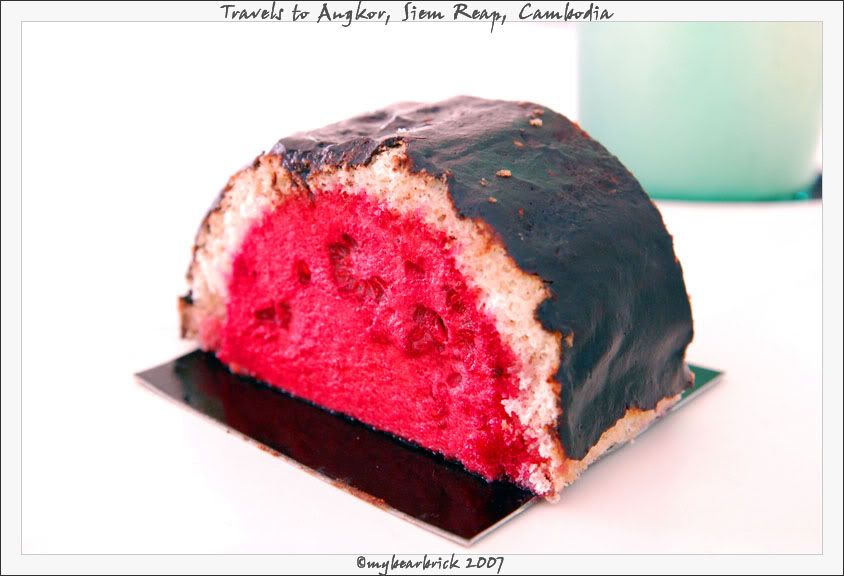
A sweet treat to finish it.


We were back on the streets. With all the food heavy in our tummy, we needed to walk around to digest. Fio decided to go for an hour-long Khmer style foot massage for US$6, apparantly, the full body massage costs the same as well. I did not try as I was always ticklish about massage. According to Fio, it was unlike any of our foot massage where the masseur presses your sole hard, giving you a nasty scream and then diagnose any potential health problems.
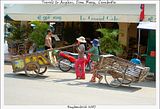
Left shows two garang-guni.
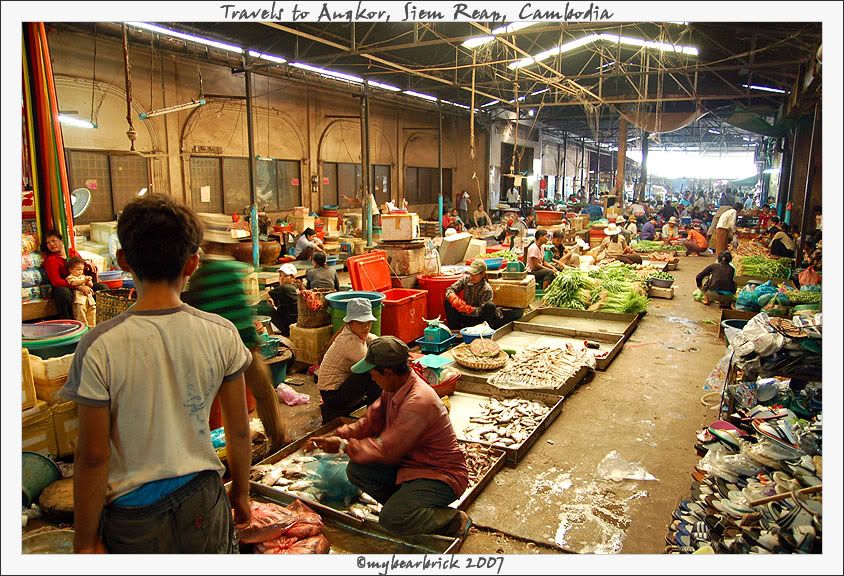
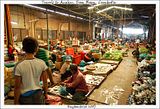
Right shows the wet market, again. Not that I was going to buy something, but just that I was interested the way they operate.
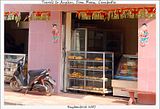
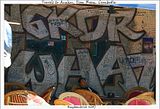
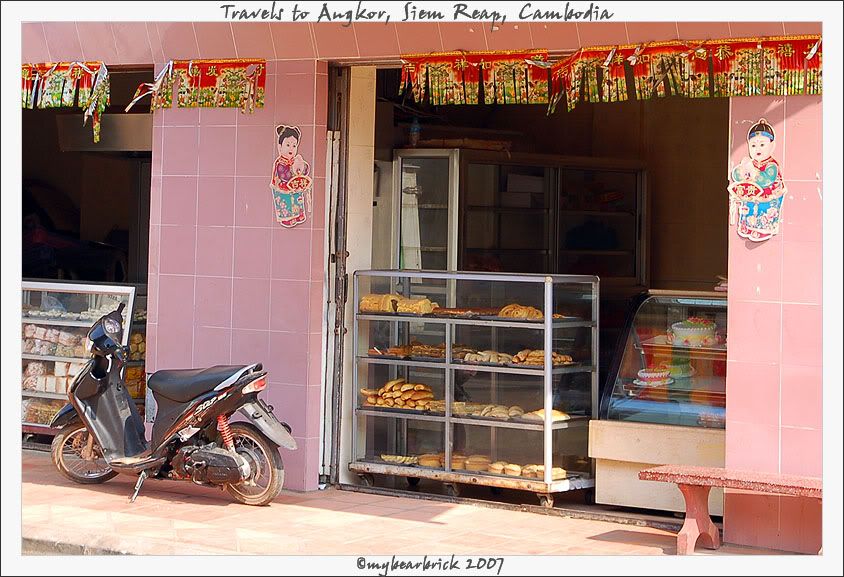
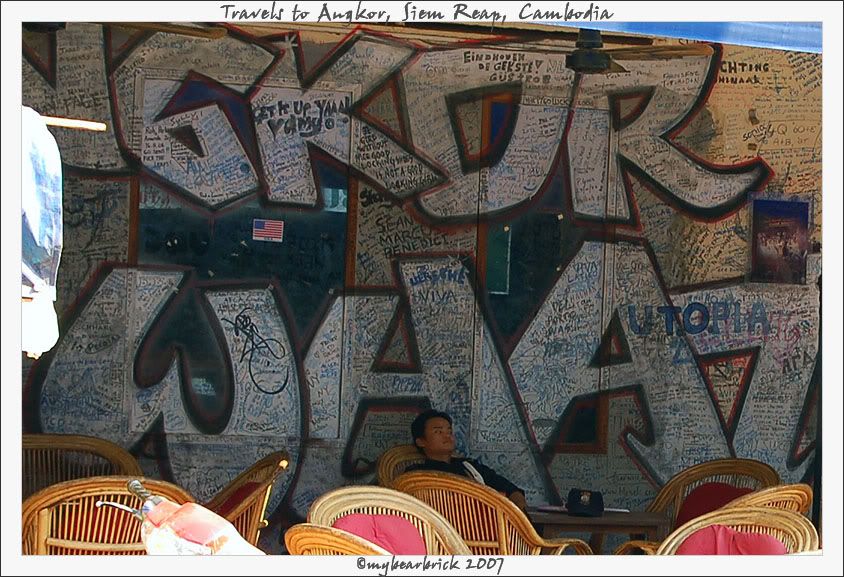
Left shows a chinese bakery. Right shows a famous cafe/pub, Angkor What!
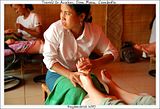
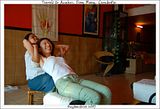
How did the foot massage end up in a wrestling match?

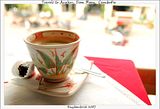
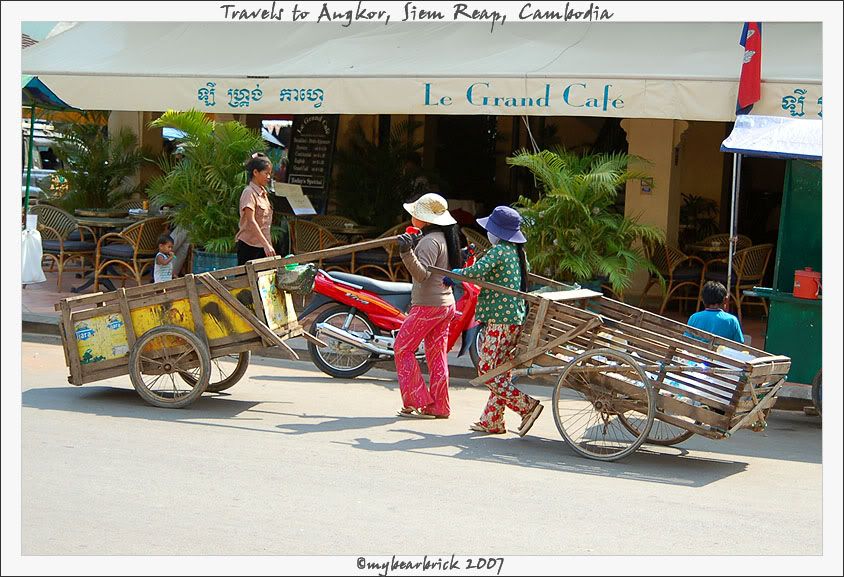
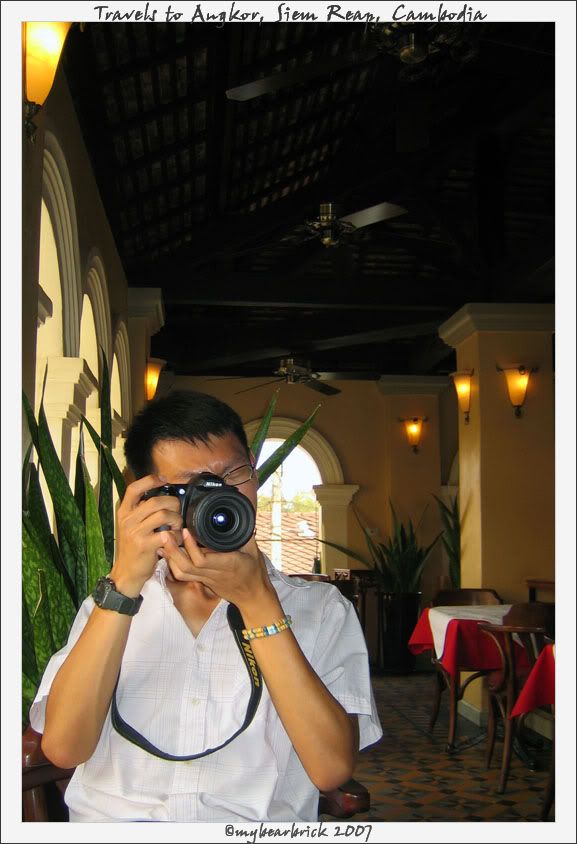
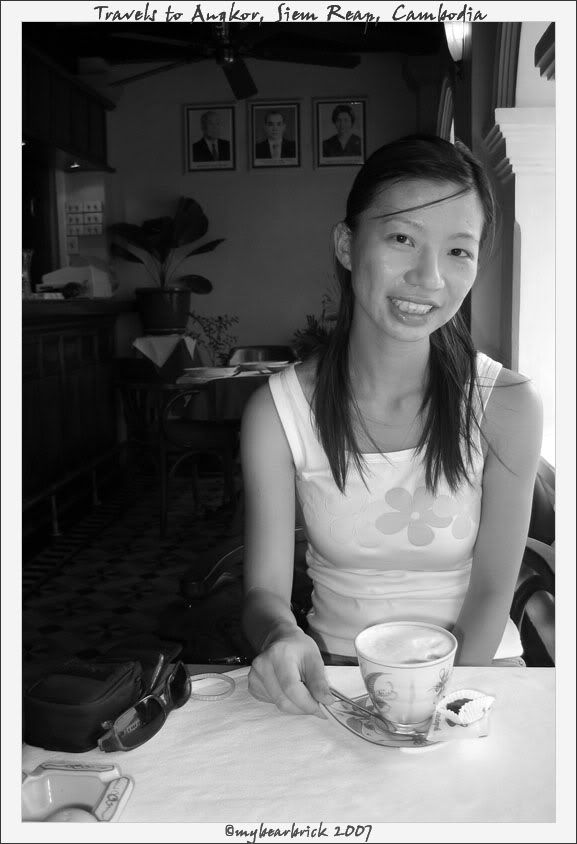
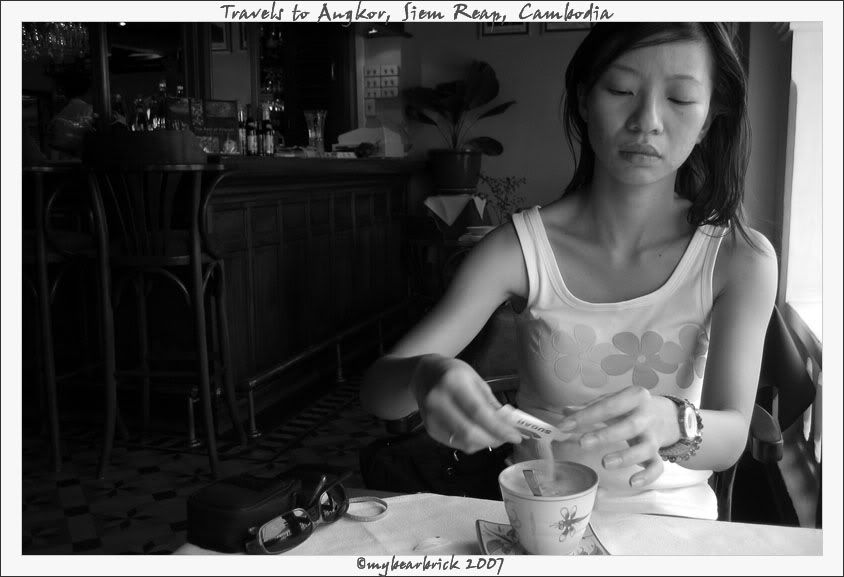
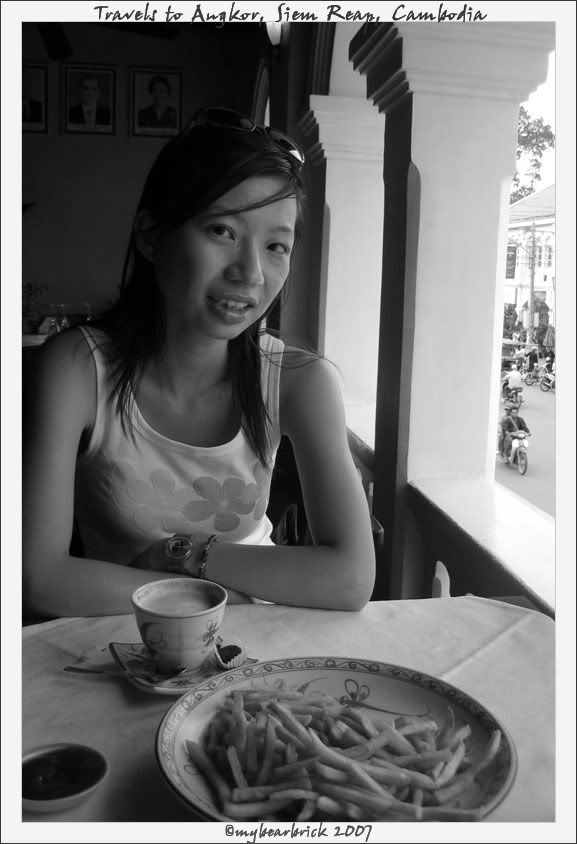
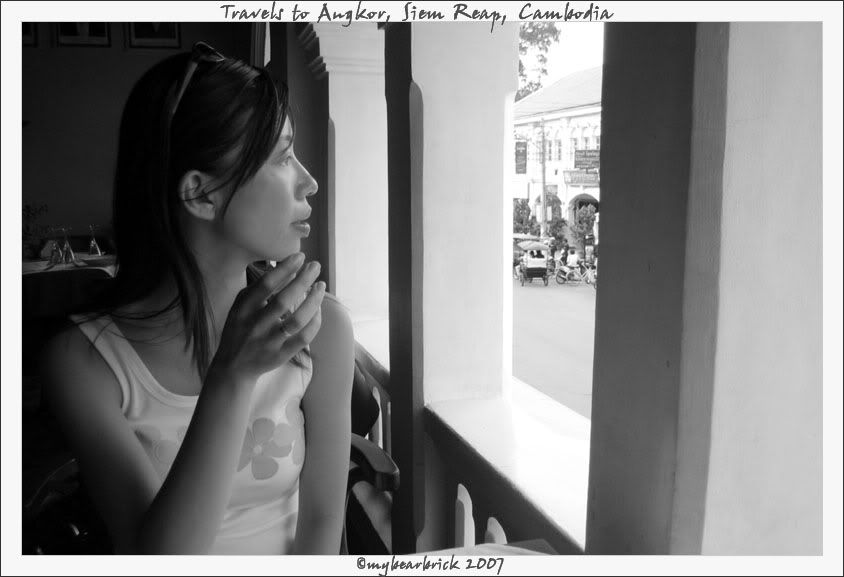
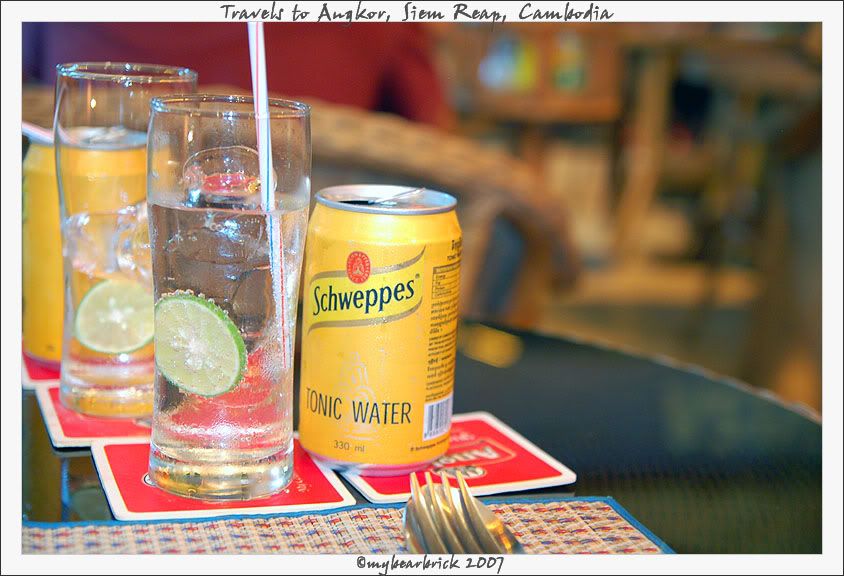
We thought we should really stop roaming the streets and decided to go for a coffee and a snack at Le Grande Cafe at 5pm.
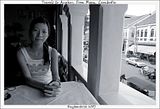

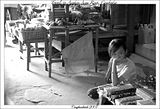
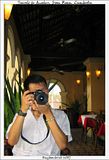
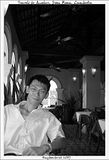
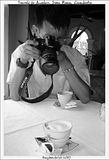
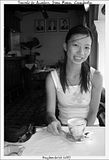
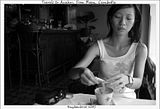
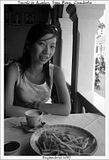
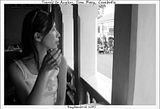
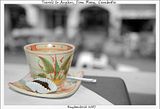
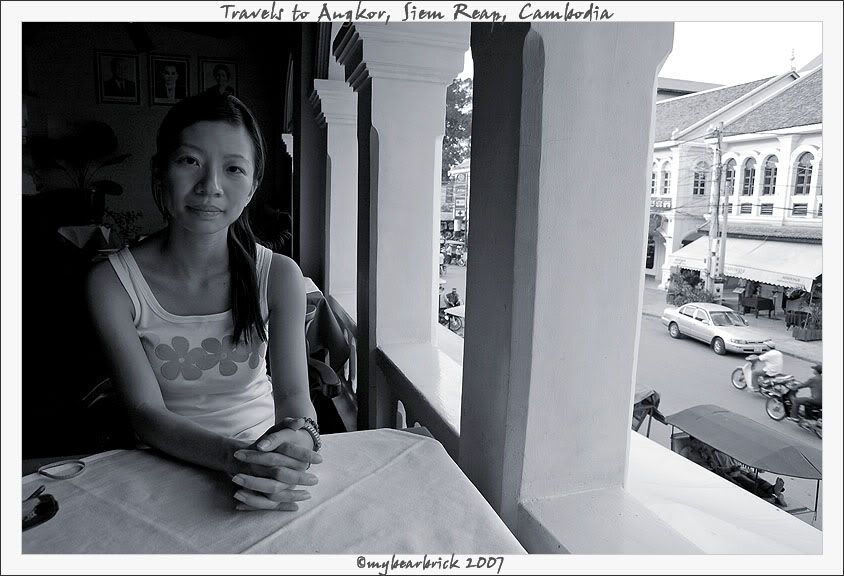
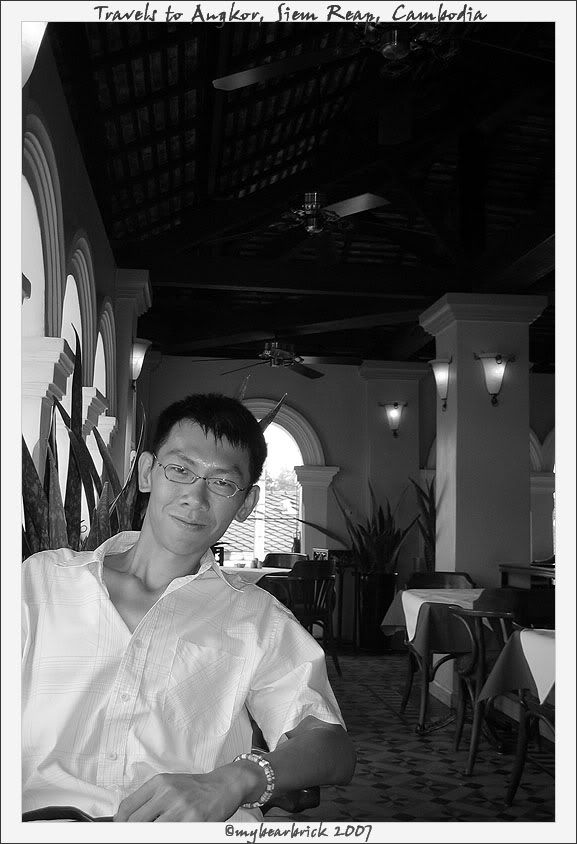
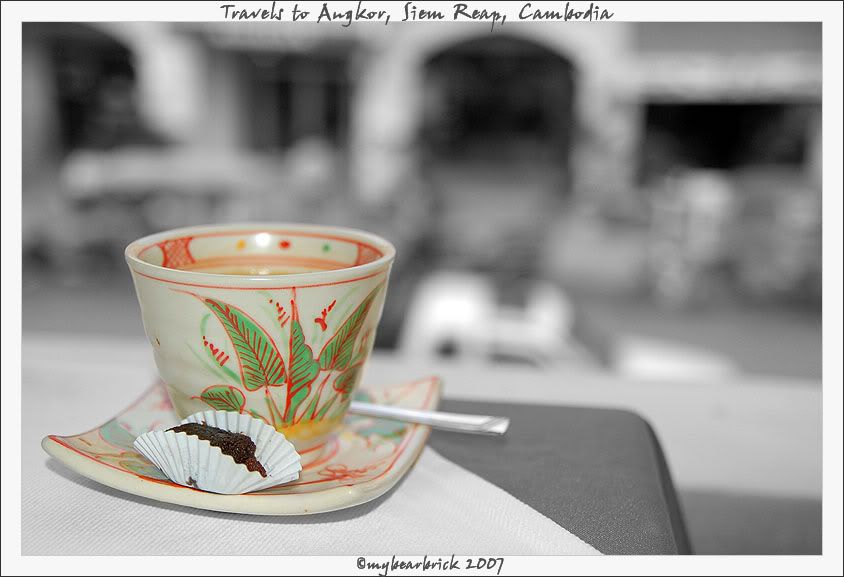
We had fun snapping in B&W.
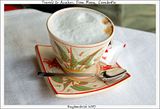
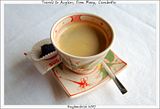
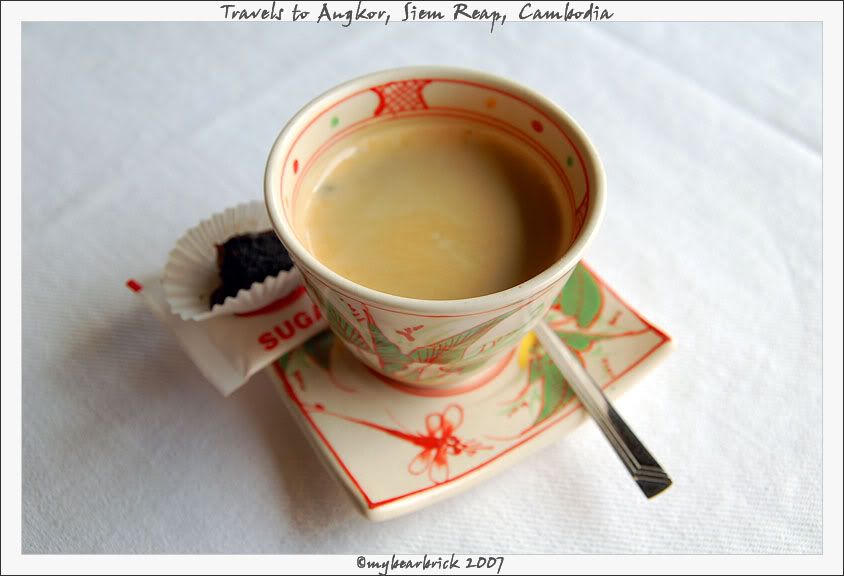
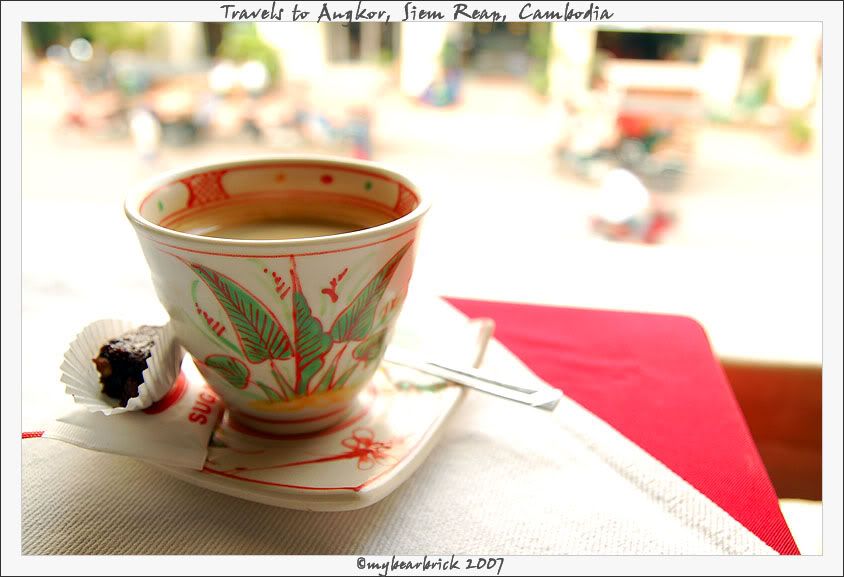
Coffee anyone?
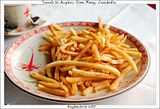
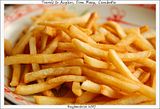
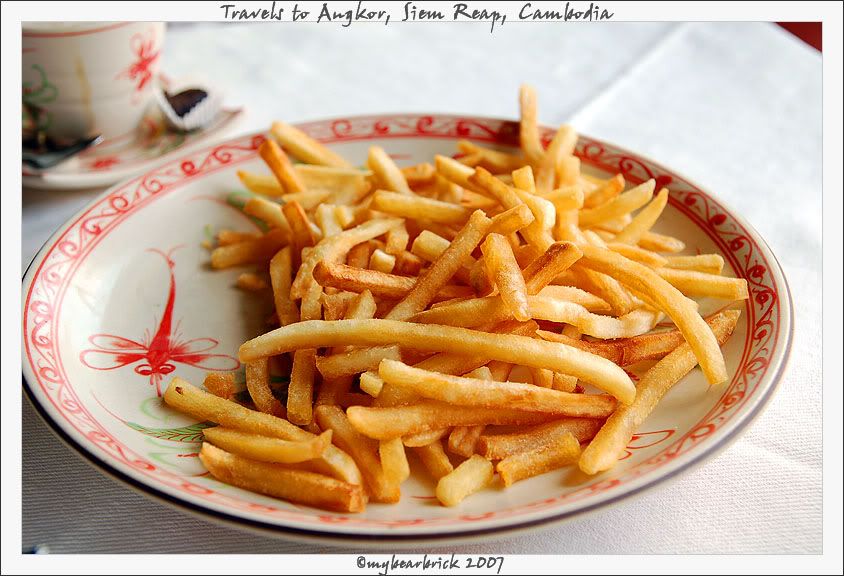
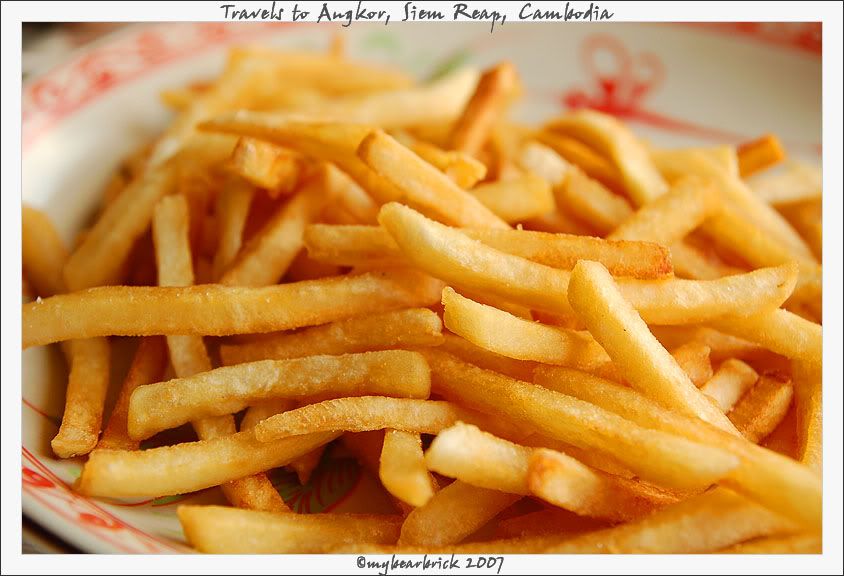
A plate full of fries.
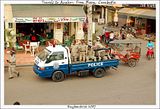
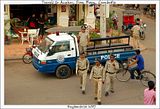
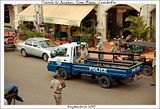
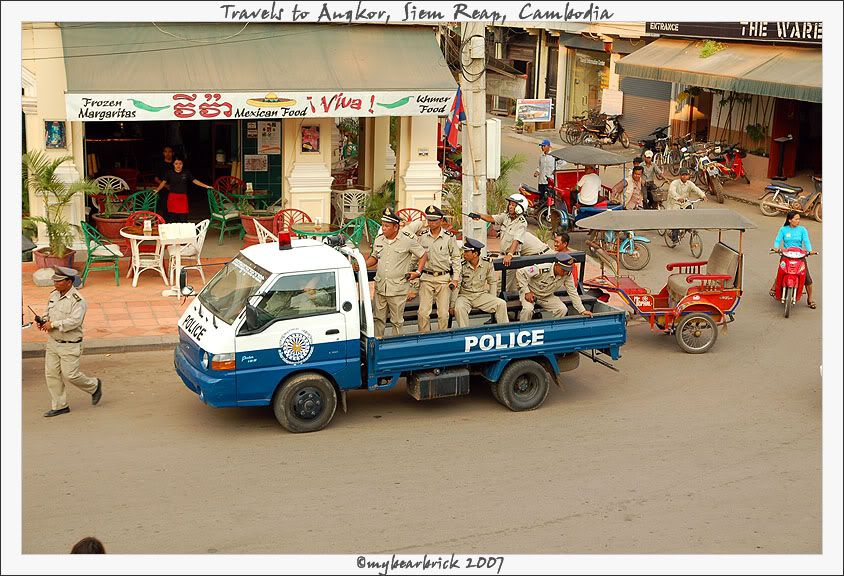
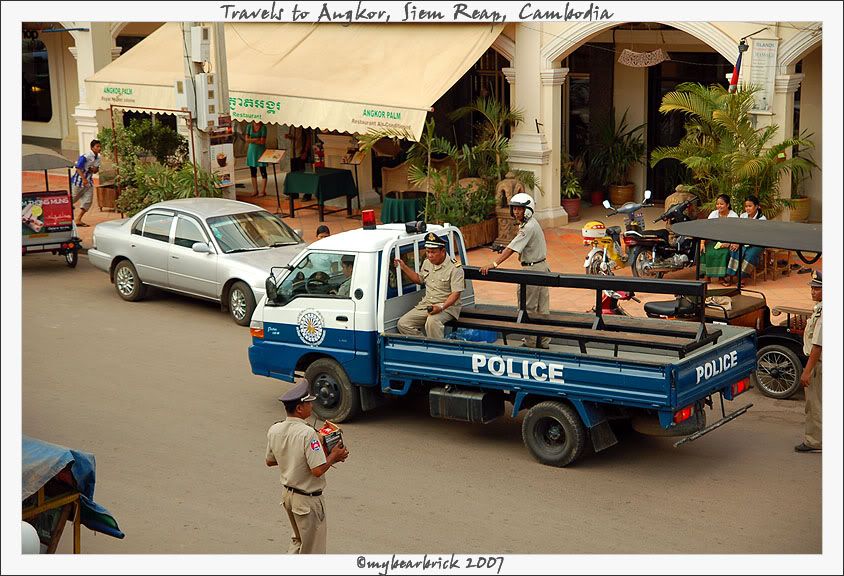
While having coffee, we witness a police truck stopping by and nabbing illegal peddlers/hawkers in the streets.


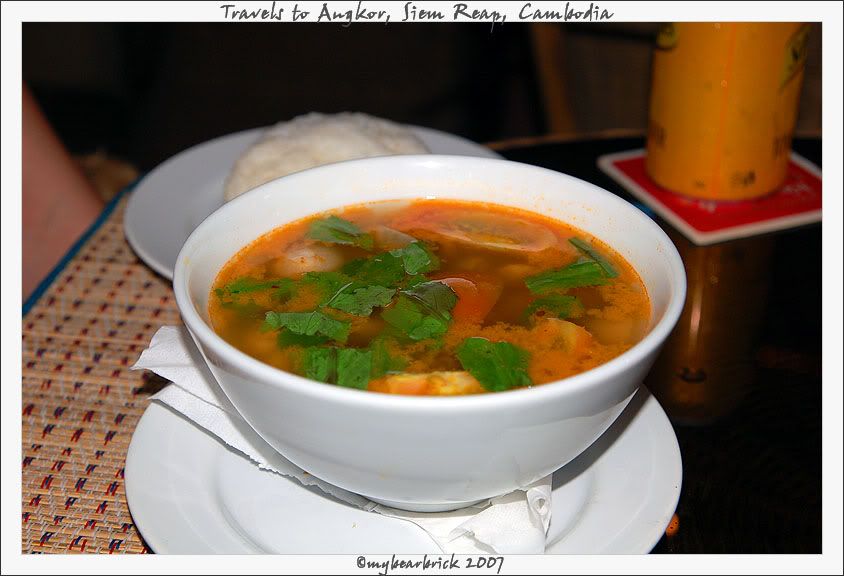
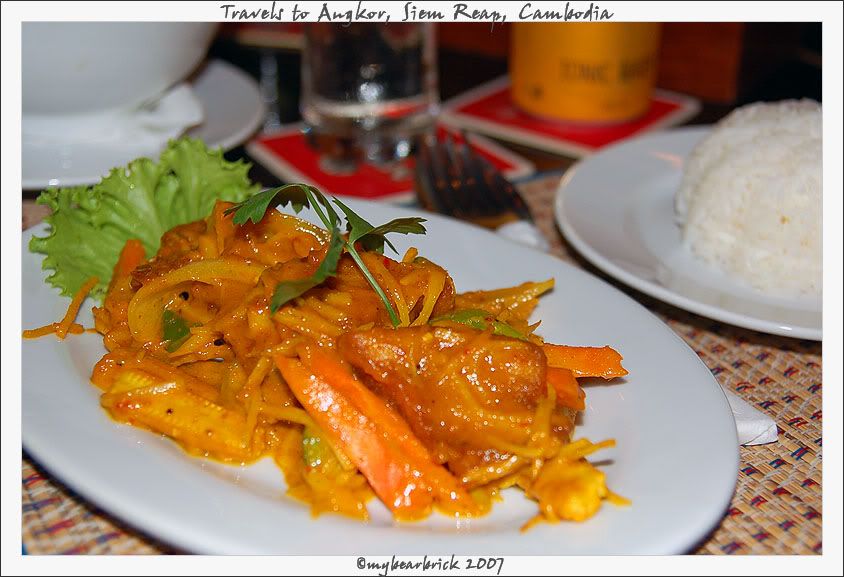
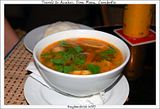
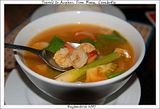
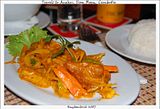
We had a dinner at around 7pm at Why Not? restaurant. It was an open-facade restaurant that serves a comprehensive range of Khmer and western food at a real cheap price. We ordered a Tom Yum soup and a sweet-and-sour fish. Our last dinner was nothing too fantastic, just a simple but rather good one.
Thank you for viewing my Travels to Angkor, Siem Reap, Cambodia collection.

technorati tags

Friday, April 13, 2007

Travels to Angkor, Siem Reap, Cambodia: Part IV

We are already now into Travels to Angkor, Siem Reap, Cambodia: Part IV, day 4 of our trip. To get a full account of the events of earlier days, visit:
Travels to Angkor, Siem Reap, Cambodia: Part I
Travels to Angkor, Siem Reap, Cambodia: Part II
Travels to Angkor, Siem Reap, Cambodia: Part III


We woke up really early on our last day of our Angkor temples visit. We got up at 4.30 am and got ourselves ready for Sakhorn to pick us up at 5 am. We stealthly made our way down the stairs so as not to disturb anyone, though there were no other guests. We got to the main door of our gh, but when I tried to pull the left door, I realised that it was locked by chains. The rambling of the chains caused the two resident dogs bark out loud. The racket broke the silence and woke 'madam', who was sleeping in the first room on the ground floor. She came out from the room, turned on the porch (which was converted to the dining area) lights and unlocked the chains on the right door. She went out and nudged one of the caretaker who was sleeping soundly in his make-shift bed with a mosquito net. On the contrary, he was supposedly the night watch, but seems like even the dog's barkings could not even wake him up. He opened the gate for us to get out. It was chilly outside, early in the morning; I wonder if it was due to the sudden storm last night. Sakhorn soon arrived and we headed off to catch sunrise at Angkor Wat. We paid Sakhorn US$5 for making this early trip which was not part of the packaged itinerary.

We reached Angkor Wat at around 6.15 am. There were already quite a lot of tourists. I 'action-front' (set up/prepare) my Manfrotto tripod and started taking some shots of the dark blue sky. There were a lot of photographers equipped with top-class equipments, especially the Canon white 'L-lenses'. However, we were all disappointed when there was actually a patch of cloud blocking the sun. By around 7am, the sky was rather bright, but the sun was still not in sight, as it was blocked. Many enthusiastic photographers and tourists' moods were dampened. I was rather disappointed too, but nevertheless, managed to get a few decent shots in Angkor Wat without much tourists. At around 7.15-7.30 am, most of the tourists who were here for sunrise, had left Angkor Wat, while the main groups of tourists were not here yet. It seems that tourist groups tend to pour into Angkor Wat at around 8 am.


At the causeway of Angkor Wat
Angkor Wat reflected off the surface of the small pond in the outer enclosure, a classic photogenic scene. However, the morning pond activity created too much ripples to give a clear reflection.
We were able to take some shots without much tourists in the frame.
Center shows a nun crossing from the outer enclosure to one of the worship points in the gallery of the outer wall.

Standing on the causeway, behind is the huge moat surrounding the Angkor Wat.


After Angkor Wat, we went back to our gh for breakfast. At 9 am, Sakhorn was back at the gh, ready to pick us up for our trip to the Roluos Group. Learn more about Roluos Group. Along the way, I took plenty of shots of daily Siem Reap life from my tuk-tuk. It was definitely very interesting seeing how the Cambodian people go about their daily activites/routine.


Left shows a street side stall selling drinking water and diesel.
Center shows two siblings getting to work and school, on a bicycle.
Right shows a replica of Mickey at a petrol kiosk.

Left shows teachers in uniforms waiting for school students.
Center shows a worshipped temple in the middle of the cross junction, under a huge tree.
Right shows a man watering the floor to prevent dust.

Left shows a push-cart fruits peddler.
Center shows a market, bustling with life.
A motor-cart selling toys and clothes.


Left shows people packing up onto a small pick-up.
Right shows a curious sugarcane cubes seller.

Left shows people selling petrol or diesel.
Center shows a starving cow.
Right shows a shed at the front of a house made by the owner, for activities or small businesses.


The first temple of the Roluos Group that we visited, was the Preah Ko. Learn more about Preah Ko. This temple is also known as the 'Sacred Bull', attributed to the three kneeling Nandis corroborate the temple's dedication to Shiva. In the temple, there once stood the Hariharalaya, the 'Seat of Harihara' which was dedicated to the Vishnu and Shiva.


Left shows a kneeling Nandi or Sacred Bull.
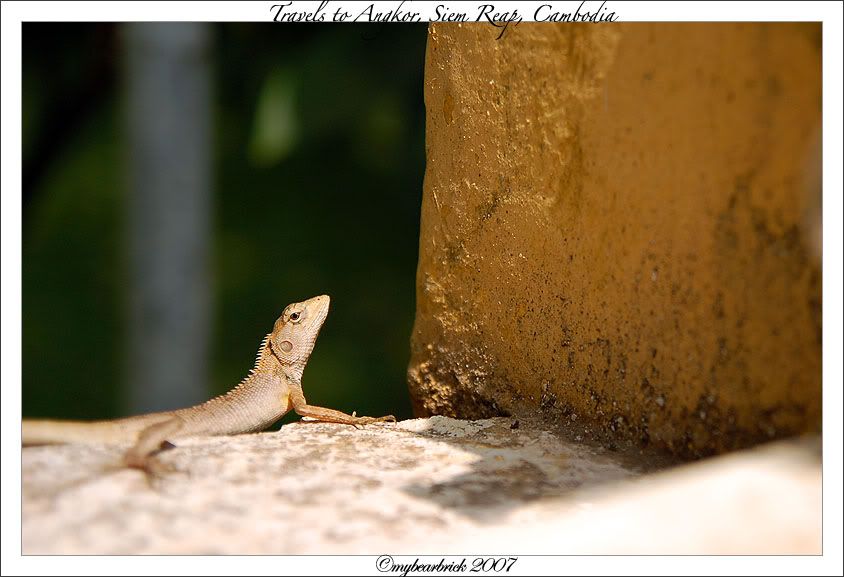
Right shows a sleek-looking lizard living in the temple premises.
Far left and third images shows sandstone niche with a Dvarapala or Gate Guardian.
Far right image shows inscriptions on the temple door, peeling off.
Left shows a sandstone dvarapala separating itself from the brick architecture.
Right show intricate lintel works.
These seeds were scattered all over the floor.


The second temple of Roluos Group we visited was Bakong. Learn more about Bakong. Bakong is the official temple of the Hariharalaya. The base of the temple is a five-tiered pyramid, believed to present the five earthly realms of snakes (nagas), birds (garudas), demons (rakshasas), nature-spirits (yakshas), and kings (rajas).
Around Bakong, there is a community of locals living there. Since it was a weekday, children can be seen in school uniforms. I guess it was after classes, children were hanging around the temples. They were so used to begging for money from tourists, a simple US$1 will please them. I would not hesitate to give them, but it might encourage them to think of begging as a source of income and make them dependent.


Lovely children turn to begging as their source of income. Sad to encourage yet reject them.
Left shows a long naga flanking the short causeway. Interestingly, this naga is not tugged by gods, atypical of naga bridges.
Right shows Bakong.

Left shows the steps up the 'mountain temple'.
Right shows Fio hounded by a persistent girl who insisted that she take a ring made from a small flower, free-of-charge, but later begged for a dollar but refused my offered Riels.

Left shows the top central prasat surrounded by stone lions.
Right shows the surrounding smaller prasats.


Lolei was the last of the Roluos Group temples which we visited. Learn more about Lolei. Lolei is a small compound where six prasats stood in a 3 by 2 orientation. There was nothing much of Lolei to explore as the whole compound has been surrounded by a barrier. Much of the existing damage, by part caused by tourists touching them, makes the compound unsafe for entering.


After visiting Roluos, Sakhorn suggested that we visit Beng Mealea for an additional US$30 for two of us. Learn more about Beng Mealea. Beng Mealea was hidden within thick jungles for centuries and has only been discovered lately. This magnificent temple was said to be Pre-Angkorian, preceeded and was a template for the Angkor Wat. The regular Angkor pass is not required but it takes 1-2 hours on a good 63km road from Siem Reap town. An entrance fee of US$5 is required before entering Beng Mealea. Some people swore by its ancient grandeur and beauty, while we decided pass and to take the rest of our day exploring the bas-relief of Bayon and Angkor Wat in detail.

Before all that, we had lunch back at Khmer Village Restaurant, which we had visited earlier. This time we had something different. I ordered a fresh coconut drink, strangely, they only cut a small opening at the top, fit for a straw. I wondered if they have the habit of eating the coconut flesh. We had stir-fried beef with mushrooms and Amok fish. As I have mentioned earlier in Part II of my post. I had Amok fish at the Dead Fish Tower. The Amok fish served at this restaurant was different. There was no white cabbage and otar, but they had a thick coat of shredded spinach layered over the fish drowned in flavour-rich coconut syrup. The serving style was also different from that in the Dead Fish Tower, but still tasted great!


A cooling coconut drink and cheers to a soya bean drink.

Stir-fried beef with mushrooms and my favourite Amok fish.


We had missed Ta Keo earlier and so we visited it after lunch. Learn more about Ta Keo. Ta Keo is another tall temple built on a five-tiered pyramid, but was incomplete. However, the view from the top was great! We took some time relaxing up by the door steps of the central temple and enjoyed the breeze in the scorching noon sun.


We soon found ourselves back in the gallery of The Bayon (visited earlier in Part II). The outer gallery walls of The Bayon was famous for its bas-relief documenting the Khmer history in detail.


Starting from the south wing from the east gallery.
Left shows the Khmer army marching in battles against the Cham.
Middle shows Khmer soldiers dressed in tunics, typical of Cham. There was much confusion as during those times, some Khmer army were seen fighting alongside the Cham and vice versa.
Right shows a commander on an elephant. Commanders are usually made to look bigger than the foot soldiers.
During those times, Chinese were found fighting alongside the Khmer.
Left shows Chinese men, identified by their facial features and especially the beard.
Middle shows livestock for the soldiers, a pig.
Right shows Khmer people following behind the army, providing support such as logistics. You can even spot a man blowing a small stove under the cart, as if intending to cook something.
Left and middle shows the domestic lifestyle.
Right shows Khmer army on boats preparing for a naval battle. Khmer soldiers are easily spotted by their long ear lobes and commonly dressed in just a loincloth.
Left shows victims of crocodiles who fell off the boats.
Middle shows the Cham soldiers rowing into a naval battle. Cham soldiers are spotted by their strange-looking headdress and they wore tunics. It was said that the Cham sneaked a surprise attack on the Khmer by rowing up the river into Tonle Sap lake (I visited in Part I).
Entertainment during peace time includes rooster fighting (left), boars fighting (middle) and gladiator competitions (right).
Left shows Cham army marching into battle.
Middle shows a Khmer commander killing a Cham soldier.
Right shows a Khmer commander giving instructions to his elephant commander.
Left shows a Khmer commander attacking Khmer soldiers.
Middle shows jesters with monkeys performing acts.
Right shows a wrestling match.
Left shows a sad-looking Cham.
Right shows a Khmer soldier fighting one-to-one with a Cham.
More fighting between the Khmer and Cham.
Left and middle shows a Khmer soldiers killing his Cham enemy.
Right shows the clash of two armies.

Left shows a Cham commander leading his men forward.
Middle shows Chinese soldiers on the march.
Right shows Chinese cooking. It was definitely interesting to know that during that time, the Chinese were already making allies (with Khmer) outside China.


The next stop was Angkor Wat (visited earlier in Part II). There is also plenty of bas-relief on the outer gallery walls depicting scenes of religious Hinduism significance, instead of historical events (as in The Bayon). During our visit, the authorities had layed a rope as barrier, to prevent tourists from touching the bas-relief, as you can see that the years of touching had made the relief smooth and shiny, some even loosing its definition and depth. We started off from the west gopura and explored in a counter-clockwise motion.


Scenes of the Battle of Kurukshetra. Learn more about this great Battle of Kurukshetra.
Left shows Valli the monkey god, dying in the arms of his wife Tara.
Middle shows Ravana shaking Mount Kailash.
Left shows Lord Vishnu, the god that this temple was dedicated to.
Judgement of the Dead, the day when all good goes to heaven and all evil goes to hell.

Churning the Ocean of Milk
Learn more about Churning the Ocean of Milk
Briefly, the story of this event is about Indra, the god of weather and war, who accidentally offended a sage, Durvasa. The enraged sage cursed Indra and the Adityas (gods) to lose all their wealth. Indra then seeked helped from Brahma, who later suggested him to churn the Ocean of Milk and retrieve the Amrutha (Nectar of Immortality). However, this task was not an easy one that cannot be accomplished by the Aditayas. Hence, they sought aid from their arch-enemies, the Asuras (demons), in agreement to share the Amrutha. The Ocean was churned by using the Mount Mandara or 'world mountain' as the pole and the Cosmic Serpent or 'king of nagas', Vasuki, as the rope which was wrapped around the mountain. The Asuras led by Ravana (depicted by its multiple heads and arms) held the head of Vasuki, while the Devas (gods), led by Hanuman held the tail end and pulled on it alternately, causing the mountain to rotate, which in turn would caused the Ocean to be churned. The churning was supervised by the Supreme Being, Vishnu, as seen in the middle. However, once the mountain was put on the Ocean, it began to sink. Then came Vishnu in his second incarnation, the avatar Cosmic Turtle, Kurma, to support the mountain on his shell. As the ocean was churned, a deadly poison known as Halahala emerged. This poison threatened to suffocate all living things. In response to prayers, Shiva drank the poison but was stopped by his wife Parvati by clenching his throat causing it to turn blue. Eventually, various ratnas (treasures) emerged from the Ocean.
Ninety-two Asuras led by Ravana tugging the head of Vasuki.
Lord Vishnu supervising the churning. Asparas can be seen along the top row.
Middle showsing Lord Vishnu in his avatar, Kurma.
Eighty-eight Devas led Hanuman tugging the tail of Vasuki.


After our tour, it marked the end of our three days Angkor tours. Sakhorn brought us to another souvenier shop, but there was nothing much to buy. We dropped off at Old Market area and visited The Red Piano restaurant. The Red Piano is made famous after its visit by Angelina Jolie, during the filming of Tomb Raider. The restaurant also had a cocktail named after the famous celebrity. We were early and found ourselves a good seat overlooking the 'Pub Street' of the Old Market precint. The bottled soft drinks came free with our meals, available only till 8pm. We did not order any Khmer food, but instead had Thai curry and I ordered a Gordon Blue.


The Red Piano restaurant.
Its own name carved into the wooden chairs.

Getting impatient waiting for me to snap pictures of the food before digging in.

The Thai red curry wasnot too spicy, but good enough for our taste buds. The full-bodied coconut flavour sweetened our throats with a lingering taste of spices. The vegetables were also fresh and crunchy.
The first time I had my Gordon Blue was in Prague. I had my second Gordon Blue, not in Singapore, but in Cambodia. The crumb crust of the pork cutlet was fragrant and crunchy. Upon cutting open the cutlet, a gush of steam carrying the flavour rose to my nose. I could not wait to sink my teeth into the meat. The pork was tender and sweet, together with the semi-melted cheese and ham embedded in the mid-section, simply a match made in heaven!


Keep watching this blog for more updates. Next up is the last day we spent in Siem Reap, where I give an account of my free and easy visit around Siem Reap town.


technorati tags
Thursday, April 12, 2007

Travels to Angkor, Siem Reap, Cambodia: Part III

Welcome to Travels to Angkor, Siem Reap, Cambodia: Part III. After the first and second day in Cambodia, we have already got used to the weather, people and lifestyle (as a tourist) here. We have visited a couple of prominent temples in the Angkor region. The itinerary of the past two days were carefully documented here:
Travels to Angkor, Siem Reap, Cambodia: Part I
Travels to Angkor, Siem Reap, Cambodia: Part II

We began third day as per normal, getting up early, have the same American breakfast and set off at 8 a.m.. On the way to the Angkor checkpoint, Sakhorn stopped by to buy himself a motorbike helmet. It was really cheap, a certified full face helmet with tinted visor for just US$15. We also bought a 6-pack, not booze, but 1.5L drinking water for US$1.25. Our first stop for the day was Preah Khan. Learn more about Preah Khan. This temple was a significant temple in the Khmer history as it was built on the site of Khmer victory over the Chams.


A garuda holding up a naga (mythological cobra).
Left shows gods pulling the body of a long naga, commonly found along bridges.
Right shows a gopura to the temple.
Left shows a guardian statue, but it was decapitated by unscrupulous tomb raiders.
Right shows a well-preserved doorway with lintel.

Most of the structure have not been able to withstand the test of time and forces of nature.
Left shows galleries that are impassable due to debris.
Right shows devatas in bas-relief.
Left shows vegetation that once overran the temple but much of them had been cleared without too much damage to the infrastructure.
Right shows the unique two-storey library of Preah Khan.
Left shows one lintel that is almost going to collapse (notice the vertical crack line), but was reinforced on the bottom by some material.

Not far away from Preah Khan is Neak Pean. Learn more about Neak Pean. Neak Pean is actually an artificial pond with a temple island in the middle. During our visit, it was hot and dry season. Hence, the ponds were dry allowing us to be able to walk up to the temple. The whole compound is made up of the temple surrounded by one pond and on four corners each an individual pond.


Walking on the dry pond to a small chapel.
In the chapel, a religious statue of an elephant is worshipped.
The temple in the middle of Neak Pean.
The main temple
A statue in the shape of a horse and men carrying it from below.

The next stop was Ta Som. Learn more about Ta Som. Our stay at Ta Som was rather short and there wasn't much photos to show either.

Left and Center shows the Face Tower at one gopura.
Right shows niche of a devata.

It did not took us long to reach East Mebon. Learn more about East Mebon. The temples was previously built on an island in East Baray. However, the reservoir has now dried up over the years. The three-tier temple elevates upwards with a nexus of small temples towers. At the corners of the middle tier, stood 8 stone elephants facing the outwards. Each elephant has a trapping with bells and a three-stranded necklace.


Four small temples surrounds the central temple.
Left and middle shows the small chapels.
Right shows the main temple.
The central temple is slightly on an elevated platform.
Left shows a statue being worshipped.
Middle shows a sealed door.
Right shows a close up on the sealed door.

One of the stone elephants with 'necklace'.

After East Mebon, Sakhorn took us to lunch at Khmer Village Restaurant near Sra Srang. It was a really hot day, we offered Sakhorn a cold Yeo's lychee can drink while he had lunch at the driver/guide's corner. Interestingly, most of the restaurants inside Angkor Wat, has got a separate dining area for the drivers/guides, usually tuk-tuk drivers. According to Sakhorn, they have simpler food at their affordable rate. We looked at our menu, the food pricing was about US$3-4 per dish, which was not expensive for us at all, but not for their locals. I was tempted to try their Amok Fish, but I thought that having coconut in the afternoon might give me a stomachache upset later. In the end, we ordered stir-fried beef with mixed vegetables and a lemongrass soup with chicken, not to forget our favourite thirst quencher, Tonic water. The stir-fried beef with mixed vegetables tasted ordinary and reminded a lot of our home cooked food. There was obviously no MSG, as my tongue is a rather sensitive MSG (monosodium glutamate, flavour enhancer) receptor! The lemongrass soup with chicken dish is something new. The soup is rich in flavour with a strong fragrance of lemongrass. The chicken breast meat was not too tender and I thought it was rather dry, but when it was dipped into the accompanying mint leaves liquid, it tasted sweet and light.

Left shows our simple lunch meal that costs us no more than a mere US$9.
Center shows the stir-fried beef with mixed vegetables.
Right shows the lemongrass soup with chicken, top left corner bowl is the mint dip.


After lunch, we embarked on a journey up north to Banteay Srei. Learn about Banteay Srei and more. Banteay Srei or sometimes Banteay Srey, briefly translates to the term "Citadel of the Woman". Such a name is attributed to the fine and beautiful bas-relief and lintels found in Banteay Srei. Sadly, after years of touching by tourists, much of the bas-relief has changed, some de-faced. Hence, the authority had set up sign pickets warning visitors not to touch the carvings. There is also a rope surrounding the central temples with the famous gorgeous religious lintels. I managed to snap a few shots of my own. Other than the lovely lintels, the carvings on the wall columns and pillars are displayed very intricate craftsmanship and art.


Before entering the temple, we were already captivated by its beauty.
The bas-relief of the lintels are fantastic and bear significant Hinduism influence.
Left shows intricate details even along the edges of door frames and pillars.
Right shows a naga on the edge on the roof of a temple.
I tried to capture all the beauty of the lintels using my maximum zoom, from outside the barrier.


We took quite a long ride to and fro Banteay Srei. We went past rural areas. However, the people there were not as poor as those along the way to Tonle Sap lake (refer to Part I to learn more). The people had better wooden, some brick, houses on stilts. Each family usually have some space around their houses, where they could set up a shed for work or business, and to grow some fruit trees. Sakhorn stopped by the side of the road to have his motorbike's fuel tank replenished. According to him, these street fuel peddlers are usually more expensive than the rare, foreign-operated fuel stations (such as the Caltex near our gh). Along the way, we also saw some people paving the main roads with stones. I also saw a vehicle that seem like a tar dispenser. The workers are most likely to be those who live in that region or stretch.


Buying diesel from the street peddlers.
Making a proper road.

We soon reached the main Angkor Archaeological Park and we visited Banteay Kdei. Learn more about Banteay Kdei. This sprawling and largely unrestored Buddhist temple was originally a monastry. The use of inferior grades of sandstone and poor construction techniques, made the temple unable to withstand the test of time and weathering. Retoration is taking place and quite a few areas of the compound was blocked off.


The main temple is on a rather tall, elevated platform. It was not much of any challenge after we had conquered Angkor Wat.
Left shows the long flight of narrow stairs.
Middle shows stone lions watching over the temples.
Right shows view from the highest platform.
Right shows the opening at the top from inside the chapel of the main temple.
Worshipped idols in the main temple.


Srah Srang is immediately opposite to Banteay Kdei. Learn more about Srah Srang. Srah means pond or pool. This huge swimming pool was used for ceremonies and as a royal bath. Now, it is a swimming pool as well, but for children who play there.


Stone lions overlook the swimming pool.


After Srah Srang, we still had time, so Sakhorn took us to Ta Prohm. Learn about Ta Prohm and more. This Buddhist monastic complex was overrun by vegetation and till date, only part of the vegetation were cleared. Many parts of the buildings are damaged by the growth and it has since became a beauty in its own sense. Thick roots run through stones, forcing them apart. However, some parts still managed to hold itself together. Any hap-hazard clearing of these trees might result in the collapse of the buildings. Hence, the massive fig and silk-cotton trees were intentionally left unrestored. Ta Prohm is a very photogenic location and the tranquility of this place led many people here to enjoy the peace and even do meditation. We bumped into a small of 3 enthusiatic caucasians who had their MacBook playing some spiritual music while 2 of them snapped away at the magnificent tree with their professional dSLR. I heard that there was this belief that the kings in the past visited this place to pray and the answers were responded in terms of echoes.


Far left shows a silk-cotton tree from the outer walls.
Upon entering the outer enclosure, we were awed by the spectacular sight of the tree growing on the building.
Much of the temple are in debris.
Right shows another gigantic tree with huge roots intertwining around the stones like a giant serpent.
Second and third images show a fig tree with roots spreading over a building like spider-webs.
Left shows one tree pushing the outer wall over.

After Ta Prohm, it was almost time for the Angkor park to close. Sakhorn took us back to Siem Reap town via a new route, a rather spacious and new 'expressway'. He asked if we would like to visit a souvenier shop. By bringing us there, he might be rewarded with a bottle of soft drink and might even get a dollar. We did not buy anything as they were too expensive compared to what we could find at the Old Market. So, I bought a nice packet of dried fruits chips for US$0.50 (2000 Riels) which I happily munched away as supper.
Since we wanted to see the sunrise at Angkor Wat on the next day, we though we return to our gh for dinner and have an early night. We asked 'madam' to fix us some Korean food. We had Kimchi Jjigae (김치찌개) and Khmer fried rice with Bibimbap (비빔밥) banchan (반찬). Kimchi Jjigae is a tasty Kimchi soup dish with tofu and pork, US$3. The Bibimbap ingredients consists of zucchini and according to 'madam', two different types of kimchi and one sauteed vegetables, US$4.

On the new 'expressway' back to Siem Reap.
Khmer fried rice with Bibimbap banchan topped with a sunny side up egg.
The four Bibimbap banchans. Top two shows different types of kimchi.
Bottom left shows the sauteed vegetable and Right is the preserved zucchini.
Kimchi Jjigae.
Fruit chips for supper! Yummy!


Keep watching this blog for more updates. Next up is Day 4.

technorati tags
Travels to Angkor, Siem Reap, Cambodia: Part II

Thank you for your patience in anticipation for the update on my Travels to Angkor, Siem Reap, Cambodia post. I have been busy selecting and doing editing to present the nicer photos from the 8Gigs of photos, admist my busy work schedule.
You probably have got a rather clear idea of Siem Reap, Cambodia from the information and links that I posted in Travels to Angkor, Siem Reap, Cambodia: Part I.
Now, I share share with you the places that I have visited for Day 2 of my trip.

We would need to wake up at 7am (Cambodia time: GMT +7h), have our American breakfast at our gh and Sakhorn will pick us up at 8am. We hoped on the all-so-familiar red tuk-tuk and headed out to the Angkor temples. I managed to snap a few shots of the locals on the roads to work. On the Siem Reap town roads, there are only a few traffic lights and there are no visible floor markings but just tar roads. The traffic can get rather hectic, with lots of motorists and cyclists going using one stretch of road. The common Toyota CAMRY are all left-hand drive and the vehicles usually keep to their right. Horns are sounded all the time, but people are not offended as the horns serve as warning signals to cyclists/motorists, when one is approaching from behind and intending to overtake from their left. Horns are also sounded when there are blind spots. Despite their traffic traditions, there is hardly any accidents as most motorists travel at 50-60km/h, cars and coaches slightly faster. Most importantly, they all have mutual understanding and know when to let others go first. Something that our Singapore drivers should learn.
We stopped by the checkpoint where we had our Angkor Tour passes made. A passport-sized face-shot is required, however, you can get a snapshot on the spot with their webcam. I was prepared with our nice face-shots to make our passes look good throughout our trip. There are 1 day, 3 days and 5 days passes. We bought the 3 days pass for $40 per head (fixed). We did not wait long for our passes to be laminated and given to us. We hoped back on our tuk-tuk , got our passes checked and on we go.


Here you can see the local people getting to work. A motor-cart with barrels of drinking water and a push-cart that sells beverage? Does not seem like the usual diesel kiosk to me.
The checkpoint where we buy our Angkor Tour pass.

The first stop is the South Gate of Angkor Thom. Learn more about Angkor Thom. Angkor Thom is not a temple itself, but encompasses a few temples. It was a capital of the Khmer Empire during Jayavarman VII's rule. The architechural style is refered to as Bayon.


There is a huge gopura (gateway tower) at the South gate joined by fortified walls marking the perimeter of Angkor Thom.

Right shows bats hibernating under the gopura. It was very dark in there, but I had pushed up the ISO and exposure to give a clear view.

Elephant rides up to The Bayon located in Angkor Thom, at US$10 per ride. Right shows one of a stone face lining the causeway to the Angkor Thom gopura.

We hopped back on the tuk-tuk and Sakhorn drove us up north to The Bayon. Learn more about The Bayon. The Bayon was the last state temple built by Jayavarman VII in Angkor. It was intended to be dedicated to Mahayana Buddhism during construction and was later 'remodelled' to be Theravada Buddhism. Much of the exterior of The Bayon was under restoration work when I was there. On the outer gallery walls of The Bayon, there are plenty of interesting bas-relief (stone carvings) documenting the historical events of the Khmer Empire and War of the Khmers and Chams. I did not have much time to explore the bas-relief only until Day 4.

There are many stone buddha idols that are worshipped by nuns. The nuns will offer incense for worship requesting a donation as token.
Hall of Dancers where there are many bas-relief of aspsaras (celestial dancers).
Left shows bas-relief commonly found on arch of doorways.
Warnings to steep steps ahead, but that did not deter our exploring spirits. Steps are as narrow as the width of a foot.
A multitude of huge stone faces can be spotted on top of The Bayon.
A spot loved by tourists, is where one stands in one particular doorway and the face of one can be aligned such that her/she is gently kissing on the face of one stone face with the clear blue sky as the background.

The next stop was Phimeanakas. Learn more about Phimeanakas. This small Hindu temple tower built in a Khleang style.

Left shows a gopura dividing The Bayon compound from the Phimeanakas.
Middle shows a challenging climb up the Phimeanakas, which I did not take on.
Right is the Phimeanakas itself.

Next, we headed skipped the Terrace of the Elephants and headed straight for the Terrace of the Leper King. Learn more about Terrace of the Leper King. We approached the terrace from the bottom admiring the fantastic work of religious bas-relief. On top of the terrace, sits Lord Yama who is the Hindu God of Death, he is also known as 閻羅王 or Emperor of Hades by the Chinese. When the statue of Lord Yama was first discovered, there was a lot of discolouration and moss growing on this statue in particular, making it look like it had leprosy, hence the origination of the name Leper King. On the contrary, the bottom of the terrace which is like a small maze with walls filled of interesting bas-relief, represents hell; The top of the terrace where Lord Yama sits represents heaven. After visiting the Terrace of the Leper King, we back-tracked a bit to catch a glimpse of the Terrace of the Elephants. Learn more about the Terrace of the Elephants.

Huge walls with multiple levels of religious bas-relief can be found at the Terrace of the Leper King.
Fantastic work of art
On top of the Terrace of the Leper King

Lord Yama or 閻羅王
Terrace of the Elephants.
Left shows elephants that are of great significance in Hinduism.
Right shows garudas (hawk man) lining the walls.

We got back on the tuk-tuk and Sakhorn brought us back to our gh where we deposited our barang barang. We then took a small adventure walk to the Phsar Chas (Old Market). We used our Siem Reap town map and found our way to Center Market, a newer mall dedicated to attracting tourists. Sadly, the Center Market did not receive much attention compared to Old Market. Along the Center Market west perimeter, there was a row of street stalls selling fresh fruits. We thought we really needed some fibre, so we bought ourselves a kilo of mangosteens for US$1.25. Mangosteens were chosen over the more popular mangos and bananas because mangosteens are 'cooling' and good for this climate.
We found the Old Market within a 7-8 minutes walk. We walked around the Old Market precint and decided to have lunch at a highly recommended restaurant, The Blue Pumpkin. The price of the food is reasonable and the ambience is great to unwind in a hot and dry afternoon. One can spot tourists here surfing on the free WIFI connection on the laptops. On the ground floor, there is a nice display of pastries, bread, cakes and fruits for selection. Mid-way up the stairs, there is one small corner lined with mirrors with short coffee tables and coffee-coloured bean bags on the floor. The second level is called the Cool Lounge, which is a fantastic place to chill out. The menu offered breakfast, sandwiches, local Khmer food, pastas and pizzas. The food in The Blue Pumpkin are not expensive at all, at least not for me. Each dish costs about US$4 and drinks at standard US$1-2, slightly more for juices. The lunch was fantastic and told myself that I would return again!

A few locksmith carts line the roads.
Lovely fruits
Plenty of shops selling local made souveniers and also branded backpacks at a steal.

Locals love to buy a bag of these small crustaceans. The center is a bottle of chilli sauce. I wonder how they enjoy this snack. Not for me though, since I have not had any Hep A vaccination.

A walk in D's Bookshop, a popular second-hand book stall in Old Market precint.
Used books going as low as US$5. You can find international bestsellers to books on Cambodia history.

The one and only Taiwanese Bubble Tea cafe made its mark in Siem Reap town guides.

THE BLUE PUMPKIN


Second floor of Blue Pumpkin is called the Cool Lounge.
In the Cool Lounge, there is a tall and long sofa covered in pure white linen and laid with soft white pillows. Huge air-conditioners stood on the corners of this room making it a good place to chill out. Is that the reason for its name, Cool Lounge?

Orange juice and lemon ice blend.

Left shows the Spicy Chicken Sandwich is comes with spicy chicken chunks with roasted paenuts in a spicy sweet chilli sauce wrapped in pita bread. Interestingly, a stalk of lemon grass stands among the sandwich holding the bread in place.
Right shows Linguine with bacon, button mushrooms, olives and tomatoes tossed in a creamy sauce.

After lunch, we headed back to Angkor Archaeological Park to visit the world famous Angkor Wat. Learn more about Angkor Wat. For your information, Angkor is in one of the nominated New 7 Wonders of the World. Nominate for Angkor here. Angkor Wat is the main attraction among the Angkor, no wonder it found its way onto the present Cambodian flag. Angkor Wat is built by Suryavarman II. The Angkor Wat is designed with much influence from Hinduism and hence explaining the bas-relief depicting important events of Hindism. Angkor Wat is completely surrounded by a huge moat and can be accessed only by the west causeway. Like all religious temples, Angkor Wat is built such that all libraries and gallerys have doors open towards the west. Angkor Wat is always crowded with tourist, making photo-taking a pain-in-the-ass. Angkor Wat is definitely an impressive work of mankind and left me awed. It took me quite a while to absorb the aura of superiority.
We did not have much time to explore the religious bas-relief, which I later done so on Day 4. We went into the inner enclosure straight and took on the tall temple in the heart of Angkor Wat. There are tall flights of narrow steps that lead up to the central temple. We chose one quiet one and crawled up the approximately two to three storeys tall steps, like babies. It was just impossible to stand upright and climb. When we finally reach the top of the temple, we were rewarded with a magnificent sight. Within the temple premises, there is a lingering smell of atypical of old buildings. In the central tower, there are four sides, each with a small chapel. Within each chapel, a buddha statue is being worshipped. We briefly admired the surrounding and wanted to get down so that we can catch the sunset from Phnom Bakheng. We spent quite some time going around the galleries, most of the stairs down seem very dangerous to climb down. The gradient of the steeps are about 67.5 degrees, in my own opinion. With my bulky load, I don't think I can make it down by 'baby descent' (action of going down steps by sitting down and descending one step at a time). We finally found a long queue which apparantly was one that leads to the middle stairs on the southern side of the temple. It is the only flight of stairs with iron rods mounted into the stones, as hand railings. We put our faith in the flimsy railings and made our slow descent. During this moment, I felt that I should be selling away my Crumpler 7 Million Dollar Home and get a backpack instead. The Crumpler 7MDH though useful and a good camera bag offering the best protection, can be rather cumbersome due to its shape and it being a slingbag.

On the western causeway of the outer enclosure of Angkor Wat.
At the west gopura of the outer enclosure.
Bas-relief of religious significance. Right shows devatas.
A buddha statue stood out tall admist the dark corridors of the galleries. Above the statue is a huge green 'umbrella', which I believe to be of religious significance as well.
Left shows a library with door only open to the west, the rest of supposedly doorways or windows are sealed in stone.
Right shows the both of us in the middle enclosure, behind it the inner enclosure where the tall temples stood.
Inscriptions on the pillars in the temples.
The temples in the heart of Angkor Wat.
Left shows the view from one of the windows on top of the temple.
Middle shows religious statues inside one of the four chapels.
Right shows the southern flight of steps down. Here visitors made use of the hand railings to make a careful descent. Some do it facing the front, while some prefer to face the steps. What would you prefer?

Our last stop for the day was at Phnom Bakheng. Learn more about Phnom Bakheng also known as the Temple Mountain. This temple dedicated to Hindu god, Shiva, was not the main highlight of the day. The attraction of Phnom Bakheng which makes visitors trek for a good 15-20 mins up the hill tracks, is the sunset view. The main central steps up the hill was blocked off due to its poor conditions and making climbing hazardous. We were finally rewarded by a magnificent aerial view of the Angkor Archaeological Park. Angkor Wat can be seen in the south eastern corner of Phnom Bakheng. In the middle, stood the temple dedicated to Shiva. I immediately setup my Manfrotto tripod at a good spot and held out until the sun starts to set. There were a lot of people here trying to catch a glimpse of the beautiful setting sun. I snapped a lot of shots of the setting sun and present here the better shots.

Temple dedicated to Shiva.
The setting sun.

We went back to town for dinner. We decided to pay a well-reviewed Dead Fish Tower. Learn more about the Dead Fish Tower. This unique restaurant is made famous by their multi-'floating' platforms. We chose one of the floating platform at the top of the tower and had a dinner table solely for us. There were cushions and small bolsters around for guests to sit and relax. We had reasonably priced but excellent Khmer food and traditional Khmer performances.
We ordered 3 dishes, each about US$3-4. There was the famous Amok Fish, Beef with stir-fry cabbage and Tom Yum soup with prawns.

Nothing beats drinking a can of ice cold Tonic Water after a tiring and warm day.
View from our 'floating' platform
We were entertained by a lovely performance of traditional dance.

What better way to enjoy the dance, but to sit on the edge. These are the best seats in the house!
Dinner is served!
Beef with stir-fry cabbage. The taste is very similar to our local stir-fry.
Tom Yum soup with prawns. The taste of the soup is authentic with full-bodied flavour of seafood and Tom Yum. Spicy but not too spicy for us who have a strong stomach for spice.
One Khmer dish that I love and recommend is the Amok Fish. Tonle Sap fish cooked in heavy a heavy coconut gravy is the main theme. On top of the fish is laced with a layer of fragrant otar, while the bottom is lined with white chinese cabbage. The whole dish is served in a bowl made using banana leaf.
During my trip, I tried the Amok Fish at other places and realised that there are various cooking/presentation style, but generally it is the fish and the coconut gravy.


Keep watching this blog for more updates. Next up is Day 3 where I give an account of my visit to more of the Angkor Temples.

technorati tags
Travels to Angkor, Siem Reap, Cambodia: Part I
Travels to Angkor, Siem Reap, Cambodia is a series of photo journals documenting my recent visit to Siem Reap, Cambodia, from 1st of April (Sunday) to 6th of April 2007 (Friday).
This series will be divided into 5 parts, each describing each day's events.

A number of comprehensive travel guides to Siem Reap are available online at Canby Publications, WikiTravel and Tales of Asia. You hardly need to buy a travel guide book from the book stores before travelling as the information from these sites are rather complete; you can purchase a well-printed bootleg travel guide from the street peddlers that flock the tourists zones, for as cheap as USD$2-5, although I do not recommend bootlegs, but its heart-wrenching not to buy from handicapped peddlers trying to earn a living. I will be more than delighted to provide tips to travelling to Siem Reap as well.

Angkor is located in Siem Reap town of the Kingdom of Cambodia, while the capital city is Phnom Penh. Angkor is all about the history and heritage of Cambodia, thus the silhouette of Angkor Wat on the Cambodian flag. The majority of the population are Khmer, ethnic-Chinese, ethnic-Vietnamese, Cham and immigrants from around asia particularly Korean. The people speak their own language, Khmer, while some can converse in basic English and French. In Cambodia, the currency used is US dollars together with Cambodian currency Riel (US$1 = 4100 Riel). Cambodia is in the GMT +7h time zone and their business operate from as early as 7.30am till late 11.30om. The main religion in Cambodia is Theravada Buddhism, though there are many aspects to Buddhism, their differences are very subtle. There is also some influence from Hinduism. One thing to note is that in Cambodia, fresh water supply is an issue and the tap water is not potable. Hence, even their own people drink/cook mainly using treated distilled water. The climate there is hot and dry with temperatures soaring to 35 degree Celsius. I had problem roaming in Cambodia on my mobile phone and 3G SIM card cannot even get any reception, hence I could only make international calls from via the internet at internet 'cafes' (usually a small shop or a corner of guesthouses).

We left Singapore at 6am (Singapore time) and the flight took 1h 15mins, reaching Siem Reap International Airport at 7am (Cambodia time). We took a budget ticket from Jetstar Asia. It was my first experience on a budget airline, to my expectation, food, beverage and in-flight entertainment were not provided, however, I was quite pleased with the sitting space, with some room to stretch. Jetstar flies from Terminal 1 at Singapore Changi International Airport instead of the budget terminal (eg. Tiger Airways). All in all, the short flight was quite a comfortable one. When we reached the airport, we were expecting a pick-up from our guesthouse (gh). I was told that there will be someone with my name on a sign picket, however, there was no one. I tried to make a call to the gh but all calls or sms from my mobile were barred. I then asked the taxi booking station to help me make the call, but they refused and insisted that I book a taxi from them to send me to my gh. I was pissed but had no choice but to pay US$5 for a taxi ferry. Along the way, the taxi driver kept asking whether we need him to bring us around the Angkor tours for the next few days, but I told him that we already had our itinerary planned. He mumbled something and switched off the air-conditioning immediately. He went on to rant about waiting 3 days in queue for the taxi pick-up and hoping to get a booking for the Angkor tours. I chose to ignore him.


Upon reaching the our accommodation at Little World Guesthouse, we were quite surprised that the Korean boss was not around, his wife welcomed us, but she could barely understand or converse in English. We bunked in to our room and started to sort out our itinerary with the lady boss whom we addressed as 'madam' after hearing what the rest of her staff called her. As she could not understand us well, she told us to wait for our guide/'tuk-tuk' driver, whom later introduced himself as Sakhorn. Sakhorn have had some basic knowledge of English during his understudy as a monk, so he was able to be our translator. Sakhorn is more than welcome to provide transportation and bring tourists to Little World Guesthouse to anyone whom may be interested in visiting Siem Reap. Interested parties may contact him via his mobile (855) 12 490 016 or bunna_driver@yahoo.com. I strongly recommend him for his sincerity and reasonable rates, and also to help him out. We sorted out our itinerary for our visit. We planned to get our 3 day Angkor pass on Monday (2nd of April) and start our Angkor tour then. For the first day, we decided to ask Sakhorn to show us around the city and a visit to Tonle Sap lake.

Sakhorn took us on his tuk-tuk to visit the Killing Fields memorial site. The monument in the Killing Fields memorial site has got a collection of bones from the victims of the Khmer Rouge communist regime. There was this little puppy with a badly infected skin that kept following us. We also visited a Buddhist temple in the compound. Sakhorn had told us a bit about himself. He used to be a monk and had done so because he wanted to study but did not have the money, so he became an understudy. Most elder monks in Cambodia are highly-educated (some even went to University) devoted personnels whom have given up their well-off lifestyle for the religion. He had learnt much from the his tutor monk. He later gave up his monk-hood and started a family from a planned marriage. His wife just gave birth a few days ago but sadly, his son has got a medical condition that needed surgery. His wife would later return to her hometown while Sakhorn continue to work in Siem Reap.


After the Killing Fields, we visited the Mine Museum, which is small compound dedicated to victims of mines. Till today, there are still many mines that were undiscovered in Cambodia. The creator of this musem is Mr. Aki Ra. He was once a soldier and he is very skillful and single-handedly defused a lot of mines and traps. Much of his establishment are documented in pictures and the tons of defused mines in the museum. Apart from mines, there are also empty/detonated shells of bullets and mortar bombs. There are also a lot of bomb victims there, mostly without a limb, to provide a guided tour. The tour and visit is free-of-charge but monetary donations are very much welcomed to help the victims and keep the museum running.


We later visited the War Musuem, which we paid US$2 pax. The museum has a lot of de-commissioned weapons and machines of war, ranging from Ak-47, anti-tank RPG, AA-Guns, tanks and artillery.


Sakhorn then dropped us off a Old Market (Phsar Chas) Area located in the southern end of Siem Reap town. In the market itself, there is an area dedicated to selling souvenirs for tourists. The heart of the market, is where the locals sell their groceries similar to our wet markets. There are a lot of peddlers selling vegetables on the floor while others had stalls selling fresh meat and preserved meat. My walk among the wet market was brief as I was not used to their smell of the preserved foodstuffs.


Sakhorn brought us back to our gh where we briefly had lunch, a plate of Khmer fried rice and rested till 3pm. We then bought a voucher from madam to visit Tonle Sap lake at US$13. En route to Tonle Sap lake, we dropped to visit an undiscovered (not part of the Angkor Temples) temple. At the temple, we were greeted by 3 young teenagers whom showed us around the small temple compound. They told us their plight of hoping to study and could only learn through communicating with tourists, making us feel obligated to give them a dollar each. From first look, the temple was never complete at all, from the absence of bas-relief (carvings).


We continued our ride to Tonle Sap lake. Tonle Sap lake or The Great Lake is one of the largest freshwater lake in Southeast Asia and it runs through the heart of Cambodia and connects to Mekong river. When the water level in the Mekong river rises, the water level in the lake rises to about 10 metres depth and area of about 3,000 square km (dry season) and 16,000 square km (wet season). Tonle Sap lake is the major source of protein for Cambodia dominated by people 'living on the water'. Tonle Sap lake is also the location where the significant great naval war took place between the local Khmer and the Cham. Along the way to Tonle Sap, we witnessed very poor people living in the rural area. They lived in small straw shacks, with no proper rooms, kitchen or sanitation. The living conditions are harsh beyond our imagination but the people never failed to have smiles on their faces while engaging in their daily routines.


We paid our toll of US$2 pax together with our voucher for the boat ride. A young kid took us out to sail the lake and a couple of times, our boat got stuck on some shallow water. He had to get off and yank the boat out from the lake floor. Sakhorn also got down to help as well. We spotted a 'floating' school contributed by a Japanese group. We managed to get a good view of the setting sun on the lake itself and were visited by the boat people who sold us a couple of soft drinks for a dollar each. Along the faraway shore of the lake, we also saw some settlement that belonged to Vietnamese who migrated illegally to Cambodia via the river to Tonle Sap lake.


After sun down, Sakhorn took us back to the town where we had dinner at Jasmine Angkor. It is a Khmer-cuisine buffet with traditional performances all night. The meal costs us US$10 pax excluding beverage.


Keep watching this blog for more updates. Next up is Day 2 where I give an account of my visit to the Angkor Temples.

technorati tags